Choosing the Right Manufacturing Hub in South China
Guangzhou is usually the stronger starting point for affordable everyday apparel, fast-fashion womenswear, woven dresses, tops, pants, private label basics, broad fabric and trim sourcing, and flexible sampling-to-bulk workflows. If you need speed, variety, and cost-effective scalability for everyday consumer fashion, Guangzhou provides an unparalleled ecosystem.
On the other hand, Shenzhen is worth considering for design-led, premium, technical, lingerie, activewear, smart-fabric, structured womenswear, or Hong Kong-adjacent sourcing needs, especially when the specific factory has proven category and compliance credentials. Shenzhen's reputation as a growing fashion and tech hub attracts brands looking for advanced material integration and highly structured premium garments.
Ultimately, the city is only a filter. The actual decision should be made by product category, MOQ (Minimum Order Quantity), sampling capability, QC (Quality Control) system, communication, factory verification, and export responsibility.
Quick "Best Fit" Decision Guide
- Choose Guangzhou if: You are producing everyday fashion, womenswear, require rapid trend response, need direct fabric market access, want flexible trial orders, and are looking for cost-sensitive OEM/ODM partnerships.
- Choose Shenzhen if: Your brand focuses on premium or design-led positioning, requires specialized lingerie/activewear/technical fabrics, demands strict brand-compliance expectations, or heavily relies on a cross-border trade network with Hong Kong adjacency.
- Audit either city if: The supplier cannot show actual production facilities, refuses third-party inspection, gives vague MOQ/shipping terms, or promises they can manufacture every single product category perfectly. Factory verification is always more important than a city's general reputation.
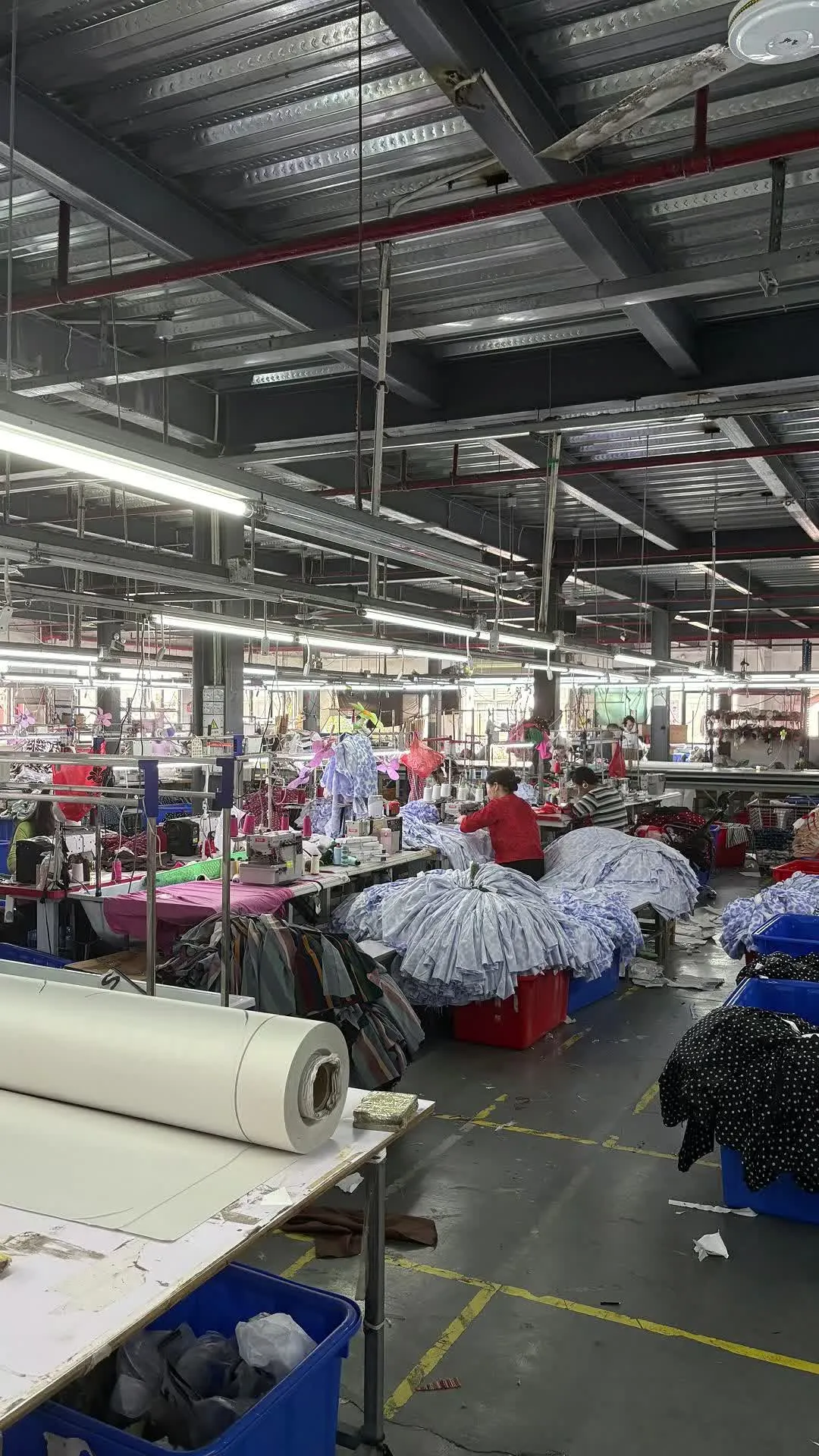
Why Buyers Compare Guangzhou And Shenzhen
When international sourcing managers, fashion founders, and wholesale buyers begin their search for clothing manufacturers in China, Guangzhou and Shenzhen frequently top the shortlist. Both cities sit in the Pearl River Delta (also known as the Greater Bay Area), meaning they are geographically close and share access to similar ports, logistics networks, and broader regional supply chains. They are not distant alternatives in the way China vs Vietnam or China vs Bangladesh are; instead, they represent different nodes within the same massive South China manufacturing powerhouse.
Buyers compare them primarily because both cities show up prominently in online B2B directories, trade show listings, and supplier databases. However, their industrial focuses differ significantly. Guangzhou is deeply and historically associated with massive fabric markets, comprehensive wholesale markets, rapid-response womenswear production, and an immense ecosystem supporting fast fashion and everyday apparel. The sheer volume of garment production moving through Guangzhou is staggering.
Shenzhen, by contrast, is often associated with innovation, a strong brand and design culture, high-value manufacturing, and close trade proximity to Hong Kong. While famous for electronics, Shenzhen also hosts specialized lingerie, sportswear, and fashion companies, along with a massive cross-border e-commerce industry. This leads buyers to wonder if Shenzhen offers higher quality or better innovation for their clothing lines.
However, buyers must be warned that "city reputation" can be highly misleading. A trading company registered in a shiny Shenzhen office might outsource its actual sewing to a factory in rural Guangdong or even further inland. Similarly, a Guangzhou-based trading office might not own any sewing machines. This is why verifying the actual factory location and capabilities is infinitely more critical than choosing a city based on its macro-economic reputation.
Guangzhou Clothing Manufacturing Strengths
Guangzhou remains one of the most formidable apparel manufacturing centers globally, primarily due to its deeply integrated supply chain and unparalleled speed to market. Its strengths are highly tangible for brands operating in fast-paced retail environments.
First and foremost, Guangzhou is a tremendously strong fit for fast-fashion womenswear, woven dresses, tops, pants, casualwear, T-shirts, hoodies, and private-label basics. The city’s factories are built to handle the rapid turnover of styles required by modern apparel brands. The workforce is highly experienced in adapting to new tech packs and reference samples quickly, allowing brands to move from concept to finished garment in record time.
A critical pillar of Guangzhou's strength is its direct access to the Zhongda Fabric Market and surrounding textile districts. According to guides from sources like Guangzhou Insider and ID Custom Apparel, Zhongda is one of China's largest and most useful fabric and trim sourcing districts for fashion apparel. This immediate proximity to materials supports rapid material discovery, rapid sample correction, and immediate trend response. When a designer needs a specific lace, a new shade of denim, or a trendy accessory, a Guangzhou factory can often source it locally within hours rather than waiting days for shipments from other provinces.
Because Guangzhou has a vast ecosystem of suppliers across all price tiers, buyers often find more options for small-to-mid trial orders. While true MOQ always depends on the specific fabric, trim requirements, garment complexity, and factory schedule, the density of manufacturers in Guangzhou means there is a higher likelihood of finding a partner willing to grow with a startup or handle smaller initial runs for established brands testing new styles.
Ultimately, Guangzhou is an excellent choice for brands that need practical commercial quality and speed rather than luxury atelier work. It is the engine room for everyday fashion, providing consistent, scalable, and cost-effective manufacturing for the global market.

Guangzhou Limitations And Risks
Despite its massive advantages, sourcing in Guangzhou comes with specific limitations and risks that buyers must navigate carefully. The very scale that makes Guangzhou powerful also makes it complex and sometimes treacherous for the uninitiated buyer.
The dense supplier ecosystem creates a labyrinth of middlemen, wholesale stalls, small independent workshops, and trading companies posing as direct manufacturers. A buyer browsing Alibaba or attending a market might believe they are speaking to a factory when they are actually dealing with a third-party agent. This can lead to communication breakdowns, margin stacking, and a complete lack of control over where the garments are actually sewn.
Furthermore, buyers must understand that the logic of the ready-stock wholesale market is entirely different from private-label OEM (Original Equipment Manufacturer) manufacturing. A supplier skilled at selling thousand-piece lots of pre-made designs may completely fail when asked to interpret a custom tech pack, manage specific grading rules, or adhere to strict AQL (Acceptable Quality Limit) standards for a private label order.
To mitigate these risks, buyers need rigorous factory verification. This includes demanding live video tours of the production line, checking Chinese business licenses for the correct business scope, requiring strict sample approval processes, and explicitly defining AQL terms in contracts. Without these guardrails, buyers risk severe sample-to-bulk drift, where the bulk production looks noticeably inferior to the approved sample.
Additionally, Guangzhou may not be the best choice for highly specialized niches. If your brand requires luxury bespoke tailoring, highly technical outdoor gear, advanced performance activewear, or rigorously certified sustainability programs (like GOTS or Fair Trade), Guangzhou's general fast-fashion factories will likely not suffice unless a specific, specialized factory can comprehensively prove its credentials. Finally, while fast sampling is a hallmark of Guangzhou, buyers must remember that this speed is only useful when fabrics and trims are readily available in the market and buyer specifications are crystal clear.
Shenzhen Clothing Manufacturing Strengths
Shenzhen is globally renowned for electronics and technology, leading some buyers to mistakenly assume it has no real apparel industry. This is incorrect. Shenzhen possesses a genuine and sophisticated apparel manufacturing base, deeply intertwined with a growing fashion and design ecosystem.
Official Shenzhen government content heavily supports the city's fashion visibility, noting its recognition by Vogue Business and the prominence of Shenzhen Fashion Week as a key Asian fashion showcase. This environment fosters a manufacturing sector geared toward higher value, design-led production rather than pure volume-driven basic apparel. Factory disclosures from premium brands, such as M.M.LaFleur, and directories like Dun & Bradstreet, confirm the presence of capable cut-and-sew companies handling designer garments, structured suiting, dresses, jersey, silk garments, and lingerie.
Shenzhen manufacturers are often a strong fit for buyers who prioritize product development sophistication. Factories here are frequently more adept at handling complex constructions, premium positioning, technical fabrics, and advanced intimate apparel. The city has a strong cluster of lingerie and activewear manufacturers utilizing smart fabrics and seamless technologies.
Furthermore, Shenzhen’s immediate adjacency to Hong Kong provides a significant advantage for cross-border coordination, advanced logistics, and access to international trade networks. Brands with strict compliance expectations, specialized material needs, or those positioning themselves in the premium or technical apparel space may find Shenzhen factories better aligned with their quality and organizational standards.
Shenzhen Limitations And Risks
While Shenzhen offers high-end capabilities, sourcing there is not without significant pitfalls. The most common mistake buyers make is assuming that Shenzhen’s reputation for innovation automatically means every clothing supplier located there is superior to those in Guangzhou or elsewhere. This is a dangerous fallacy.
Many entities registered in Shenzhen are simply trading offices, design consultancies, brand headquarters, or cross-border e-commerce companies rather than actual production sites. They leverage Shenzhen's prestige and talent pool for design and sales, but outsource the actual cut-and-sew operations to cheaper inland provinces or even back to Guangzhou. If you engage one of these companies without verifying their facilities, you are paying a premium for an office, not a factory.
Cost is another critical factor. Because Shenzhen has a higher cost of living, higher wages, and a focus on premium manufacturing, the baseline cost of production can be higher for comparable everyday apparel. If your project involves basic T-shirts or standard fast-fashion dresses, and you do not require Shenzhen's specialized design, technical capabilities, or brand-compliance strengths, you may be overpaying significantly. This cost premium must be justified by the product's requirements.
Buyers should also be highly skeptical of exceptionally low MOQ claims from Shenzhen suppliers. These claims must be rigorously checked against fabric availability, trim requirements, sample-room capacity, and whether the supplier actually owns the bulk factory. Often, low MOQ promises result in outsourced, poorly controlled production runs.
Ultimately, if a Shenzhen supplier admits to outsourcing sewing to nearby cities, the buyer must aggressively interrogate where the actual production line is located, who manages it, and where the final QC inspections will take place. The physical location of the sewing machines is what dictates quality, not the location of the sales office.
Guangzhou vs Shenzhen Decision Table
To simplify the comparison, we have created a practical decision matrix. Use this to align your specific brand needs with the typical strengths of each city's manufacturing ecosystem.
| Decision Factor | Guangzhou Clothing Manufacturers | Shenzhen Clothing Manufacturers | Buyer Decision Rule |
|---|---|---|---|
| Best General Fit | Everyday apparel, fast-fashion womenswear, dresses, tops, pants, private-label basics. | Design-led, premium, technical, lingerie, activewear, structured womenswear. | Start with your product category requirements, not a city's marketing slogan. |
| Fabric & Trims Access | Exceptionally strong direct access to massive markets like Zhongda for rapid material matching. | Can source widely, but may lack the immediate, on-the-ground depth for fast everyday fashion materials. | Choose Guangzhou when rapid material substitution, trend matching, and local sourcing matter most. |
| MOQ Flexibility | Often provides more options for small-to-mid trials due to high supplier density, depending on fabric. | May offer small batches for niche or premium programs, but verify they own the production line. | Ask for strict MOQ breakdowns by style, color, and fabric. Generic MOQ claims are often misleading. |
| Cost Position | Generally more cost-effective for value-conscious everyday apparel and fast fashion. | Can be higher due to city overhead, premium design focus, or compliance management. | Always compare quotes based on the exact same tech pack, fabric specs, and AQL inspection terms. |
| Sampling Speed | Very strong when fabrics and trims are locally available and buyer specifications are clear. | Strong when the supplier maintains an advanced in-house sample room and technical team. | Verify who actually makes the sample and confirm if the bulk production line will be managed by the same team. |
| Quality Control (QC) | Wide variance, ranging from unregulated market stalls to highly professional AQL-compliant factories. | Wide variance, ranging from premium certified facilities to mere trading offices outsourcing work. | Always require explicit AQL levels (like AQL 2.5), define inspection points, and mandate third-party audit access. |
| Product Development | Highly practical ODM/OEM support with excellent trend response and adaptation skills. | Potentially stronger for premium, design-heavy, or technically complex garment development. | Match the supplier's development depth strictly to your brand's market positioning. |
| Logistics & Export | Deeply integrated into South China's massive export networks and consolidated shipping routes. | Benefits heavily from immediate Hong Kong adjacency and a mature cross-border trade ecosystem. | Use your own freight forwarder for customs, DDP, and destination risk regardless of the city. |
| Primary Risks | Hidden middlemen, confusing market suppliers with OEM factories, and sample-to-bulk quality drift. | Engaging an office instead of a factory, and paying premium costs for simple, non-technical goods. | Verify the physical production site and demand absolute transparency for audits in either city. |
How To Decide By Product Category
The most effective way to choose a manufacturing hub is to lead with your product category. Factory specialization trumps geography every time.
- Women's Fast Fashion, Dresses, Tops, Pants: You should usually start your search with Guangzhou. The ecosystem here is perfectly tuned for these categories unless your project explicitly requires premium bespoke tailoring or specialized compliance certifications that a specific Guangzhou factory cannot provide.
- T-shirts, Hoodies, Sweatshirts, Casual Basics: Guangzhou is an excellent fit for value-conscious OEM/ODM production of these staples. You should only compare Shenzhen options if you are using highly technical materials, running a premium brand program, or require very special proprietary trims that justify higher overhead.
- Lingerie, Seamless Underwear, Performance Activewear: Shenzhen absolutely deserves a place on your shortlist for these categories due to its cluster of specialized technical factories. However, you should also compare options in Dongguan or Fujian depending on the exact product requirements.
- Premium Tailored Womenswear, Structured Jersey, Suiting, Designer Garments: Shenzhen may offer stronger technical capabilities for these complex constructions, provided the specific factory has proven references, portfolio examples, and the necessary compliance infrastructure.
- Children's Clothing: The city matters far less than the factory's commitment to safety, compliance, strict fabric testing, and rigorous controls over trims (to prevent choking hazards). Mostnica can manage children's everyday apparel conservatively, ensuring safety standards are met, but buyers must never overclaim certifications without documentation.
- Luxury Couture, Hand Embellishment, Technical Outdoor/PPE: Do not assume either city is the "best" for these highly specialized categories. You must find a specialist factory that can absolutely prove its capability, regardless of whether it is in Guangzhou, Shenzhen, or elsewhere in China.
How To Decide By Buyer Stage
Your brand's current stage of growth also dictates what type of supplier relationship you need.
- First Sample or First China Project: Choose the supplier that asks the most intelligent technical questions about your tech pack, not the one located in the cheapest city. Good communication early prevents disasters later.
- Startup Trial Order: Focus heavily on comparing precise MOQs, fabric availability for small runs, sample fees, and the factory's demonstrated ability to scale up a winning style smoothly.
- Growing Private Label Brand: Your priorities should shift toward evaluating the factory's pattern record management, ability to secure repeat fabric lots consistently, detailed QC documentation, and stable project management communication.
- Established Wholesaler/Distributor: You must prioritize sheer capacity, batch-to-batch consistency, strict adherence to packing and labeling guidelines, guaranteed delivery windows, and full cooperation with third-party inspection agencies.
- Brand with Compliance Requirements: You must request actual, current factory certifications (like BSCI, SMETA, etc.), verify their exact scope and date, and ensure they cover the specific production site where your goods will be sewn.
Due-Diligence Checklist For Either City
No matter which city you choose, rigorous due diligence is non-negotiable. Use this checklist before sending any deposits:
- Clarify the Entity: Ask directly whether the supplier is a direct factory, a trading company, a buying office, or a hybrid model. Get it in writing.
- Check Licenses: Request their Chinese business license and use translation tools to confirm their registered business scope actually includes manufacturing, not just wholesale or consulting.
- Verify Location: Confirm the exact address of the physical production site, not just the glossy showroom or central office address.
- Demand Visual Proof: Request a live video tour covering the sample room, cutting tables, sewing lines, QC area, packing station, and warehouse.
- Test Their Knowledge: Send the exact same tech pack to suppliers in both cities and compare the quality of their technical questions, not just their initial price quotes.
- Material Sourcing Plan: Ask for their explicit fabric sourcing plan, available stock fabrics, custom fabric MOQ requirements, and material lead times.
- Sampling Protocol: Confirm the sample lead time, their revision policy, and the exact process for sample-to-bulk approval.
- QC Standards: Put your AQL level (e.g., AQL 2.5), specific defect categories, measurement tolerances, labeling requirements, packing methods, and inspection timing into the written contract.
- Shipping Terms: Confirm Incoterms explicitly (e.g., FOB, EXW). Avoid assuming DDP (Delivered Duty Paid) unless the contract is clear and your freight forwarder supports it.
- Third-Party Audits: Always use a professional third-party inspection service when the total order value justifies the expense.

Mostnica Fit: Where A Guangzhou Partner Makes Sense
Mostnica, operating as the overseas service brand of Guangzhou Fulai Apparel Technology Co., Ltd., is positioned squarely in Panyu, Guangzhou. We do not pretend to solve every specialized manufacturing need in South China, but where we fit, we excel.
Mostnica is an excellent Guangzhou-based partner when you need affordable everyday apparel, fast-fashion womenswear, woven dresses, tops, pants, T-shirts, hoodies, sweatshirts, or private-label basics. Our core strength lies in providing a clear, reliable path from a flexible trial order (often around 100 pcs/style, depending on materials) to scalable bulk production runs of 3,000 to 50,000 pieces per style.
Our credibility is built on over 15 years of factory experience (founded in 2008), our dedicated Panyu showroom and R&D support team, our deep integration with Guangzhou's fabric markets, and our rigorous adherence to AQL 2.5 quality control standards, which includes incoming fabric checks, first-piece reviews, inline inspections, and final QA.
Mostnica is a Good Fit For:
- Global B2B buyers with clear reference samples, detailed tech packs, specific target fabrics, defined quantities, and realistic quality expectations.
- Buyers who need a professional Guangzhou team to review design feasibility, source commercial fabrics rapidly, develop accurate samples, and manage practical, daily QC on the factory floor.
- Brands that value highly responsive, transparent project communication and prefer a supplier that will tell them the truth rather than one that says "yes" to every impossible request.
- Buyers comfortable managing their own logistics beyond FOB or EXW terms using their preferred freight forwarder.
Mostnica is Not a Fit For:
- Luxury couture, high-end atelier work, hand-beaded gowns, or garments requiring extreme premium craftsmanship claims.
- Highly technical outerwear, advanced PPE, fire-resistant workwear, or regulated safety garments that require specialist certification proof.
- One-piece print-on-demand, retail dropshipping, or projects requiring only a single sample without bulk intent.
- Buyers requiring the factory to take full DDP responsibility, including destination customs clearance and international tax liability.
- Buyers demanding specific sustainability or social compliance certifications (like GOTS or BSCI) that Mostnica has not explicitly documented for your project.
Related Resources
Continue your research with our comprehensive guides to sourcing in China:
- Region Comparisons & Manufacturer Comparison Hub
- Guangzhou Clothing Manufacturer Fit Guide
- Women's Clothing Manufacturers in Guangzhou Shortlist
- Mostnica's Guangzhou Womenswear Capabilities
- Factory Sourcing and Audit Checklist
- OEM Clothing Manufacturing Process
- Private Label Clothing Manufacturing Guide
- Complete Apparel Production Process
Ready to Start Production?
Send your product photos, tech pack, target quantity, and market requirements to our team. Mostnica can tell you whether a Guangzhou OEM/ODM workflow is a realistic fit for your brand, what needs verification before sampling, and where a different sourcing route may be better.
Frequently Asked Questions
- Is Guangzhou or Shenzhen better for clothing manufacturing?
- Neither is universally better; Guangzhou is often better for affordable everyday apparel and fabric-market speed, while Shenzhen can fit premium/design/technical categories. Thorough factory verification matters far more than the city name.
- Is Guangzhou cheaper than Shenzhen for apparel production?
- Often Guangzhou may be more cost-effective for everyday apparel because of dense fabric/trim markets and numerous factory options, but actual price depends on fabric, construction complexity, MOQ, QC standards, and the supplier's business model. Always compare based on the same tech pack.
- Is Shenzhen good for clothing manufacturers or mainly electronics?
- Shenzhen possesses a real apparel/fashion manufacturing and design ecosystem, including officially disclosed factories for designer garments and directories of established cut-and-sew companies. It is not only electronics, but you must strictly verify the product fit with the specific factory.
- Which city is better for women's clothing manufacturers?
- Guangzhou is usually a strong first shortlist choice for fast-fashion womenswear, woven dresses, tops, pants, and private-label everyday apparel. Shenzhen may be a better fit for highly structured, premium, lingerie, or technical womenswear when the factory can provide proof of capability.
- Which city is better for low MOQ clothing production?
- Low MOQ is entirely factory-specific. Guangzhou's immense density may give buyers more options to find willing partners, while Shenzhen suppliers may offer small batches specifically for premium programs. Buyers should always confirm MOQ by exact style, color, fabric, print, and trim.
- Can I work with a Shenzhen supplier if production is outside Shenzhen?
- Yes, but you must ask exactly where sampling, bulk sewing, inline QC, and final packing happen. The physical production site matters significantly more than the location of the corporate office address.
- What should I verify before choosing either city?
- You must verify their business license, physical production site, sample room capabilities, fabric sourcing transparency, explicit MOQ, AQL levels, inspection timing, Incoterms, payment account name, and their willingness to allow third-party inspection access.
- When is Mostnica a good Guangzhou option?
- Mostnica is ideal for affordable everyday apparel, fast-fashion womenswear, reliable OEM/ODM, private label basics, a clear trial-to-bulk scale path, AQL 2.5 QC standards, direct Guangzhou fabric-market sourcing, and buyers comfortable with a FOB/EXW boundary.