AQL 2.5 Garment Inspection Guide: What Apparel Buyers Should Know
Understand what AQL 2.5 means for garments, how many pieces are inspected, what defects fail shipment, and what buyers should put in their inspection checklist before approving an order.
AQL 2.5 is commonly used as the acceptance limit for major garment defects in sample-based inspections. It usually sits beside critical 0 and minor 4.0. In the apparel industry, buyers are often trying to understand whether "AQL 2.5" is enough before placing or approving a garment order.
When you partner with a bulk clothing manufacturer, quality control is paramount. You need to know how to write inspection terms into a PO, understand factory QC reports, and decide when to use third-party inspection.
AQL sampling covers lot acceptance for workmanship; it does not replace pilling, dimensional-change, or colorfastness testing. See the sweater manufacturing and QC guide for knitwear-specific test planning.
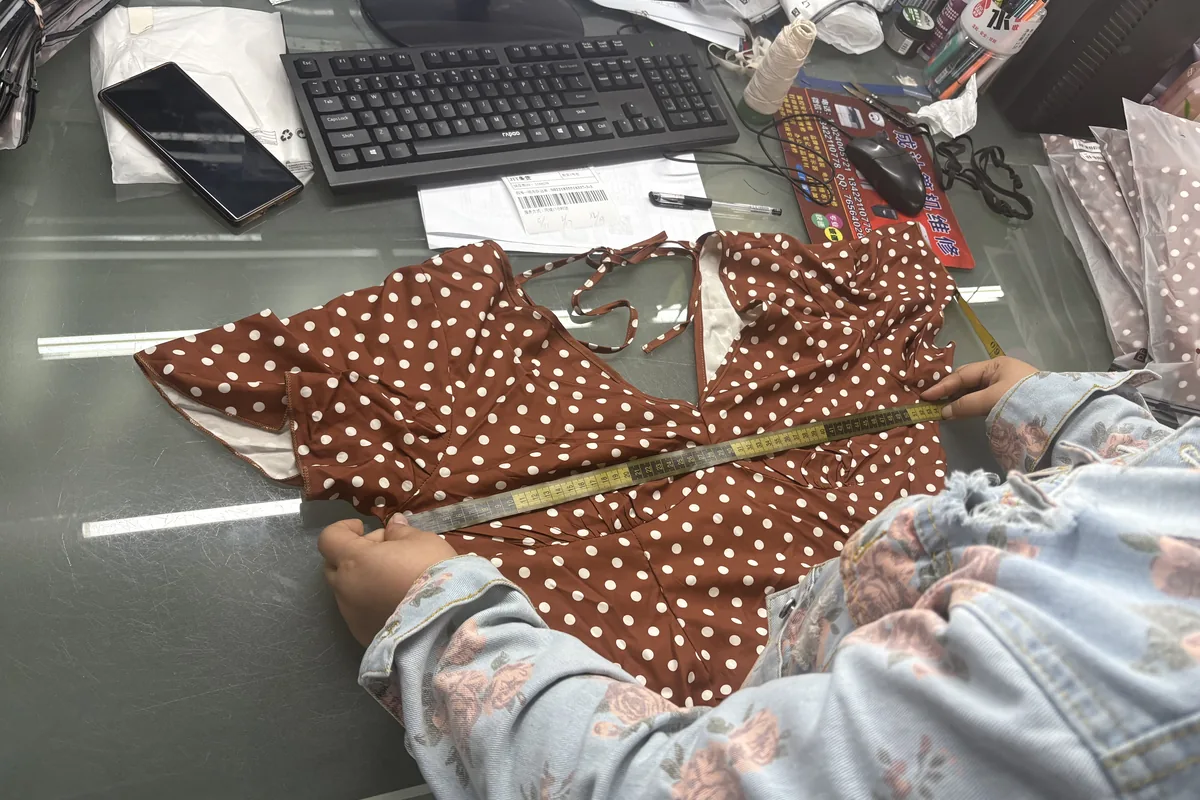
Measurement checks are one part of AQL-based garment inspection before shipment.
Understanding the Definitions
To effectively manage apparel production quality, it is essential to understand the basic terminology of acceptance sampling:
AQL (Acceptable Quality Limit): The maximum percentage or proportion of nonconforming items that, for purposes of sampling inspection, can be considered satisfactory as a process average.
Lot Size: The total number of items in a shipment or batch that is ready for inspection.
Inspection Level: Determines the relationship between lot size and sample size. General Level II is standard for consumer goods like clothing. Level I requires fewer samples (for trusted suppliers), and Level III requires more samples (for strict situations).
Sample Size Code Letter: A letter found in the AQL table based on the lot size and inspection level. This letter determines how many units will be inspected.
Accept/Reject Point: The maximum number of defective units allowed (Accept) and the minimum number of defective units that trigger a failure (Reject).
Pre-shipment vs. Inline Inspection: Inline inspection happens during production (e.g., checking the first 100 pieces off the line). Pre-shipment (or Final Random Inspection) happens when goods are 100% produced and at least 80% packed.
Garment Sampling Table (ISO 2859 / ANSI Z1.4 Style)
The table below provides a quick reference for common garment order quantities based on Normal Inspection, Single Sampling, and General Level II. Note: Buyers should always verify final values against their licensed ISO/ANSI table, inspection agency calculator, or buyer quality manual.
Lot Size (Total Garments)
Sample Size (Pieces to Inspect)
Acceptable (Major 2.5)
Reject (Major 2.5)
100
20
1
2
500
50
3
4
1,000
80
5
6
3,000
125
7
8
5,000
200
10
11
20,000
315
14
15
50,000
500
21
22
The table is a practical buyer reference, not a substitute for a licensed standard or an inspection agency's final calculation. The current ISO 2859-1:2026 standard and ANSI/ASQ Z1.4 sampling systems define the underlying inspection-by-attributes approach. Inspection companies such as QIMA and HQTS also publish plain-language AQL explanations and calculators. If your buyer manual specifies a different inspection level, sample plan, or defect limit, that buyer manual should control the order.
For practical apparel sourcing, the sample size is only one part of the decision. Buyers should also define how defects are classified, whether measurements are checked on every inspected piece or on a smaller measurement subset, and which reference sample the inspector should use. Without those instructions, two inspectors can apply the same sample size but make different pass/fail judgments.
Garment Defects Classification
During an inspection, defects found are categorized based on their severity. Here is how they are commonly divided for apparel:
Defect Class
AQL Standard
Description & Examples
Critical
0 (Zero Tolerance)
Safety or regulatory hazards. Examples: Broken needle left in the garment, sharp edges, incorrect care/content label, or non-compliant children's drawstrings.
Major
2.5
Defects that affect the usability, durability, or saleability of the garment. Examples: Incorrect size grading, broken zippers, prominent stains on the front, open seams, or significant color deviation.
Minor
4.0
Small imperfections that do not significantly affect the garment's usage or appeal. Examples: Small untrimmed threads on the inside, slight uneven stitching on an invisible seam, or minor packaging flaws.
Garment Inspection Checklist by Stage
To ensure high-quality OEM clothing or private label apparel, inspection must happen at multiple stages, not just at the end.
Before Production: Review Tech Packs, verify materials, and confirm all trim details.
Fabric Inspection: Check raw fabric for flaws, shading, and correct weight (GSM) before cutting. Shrinkage and colorfastness testing should occur here.
Pre-Production (PP) Sample: Approve the final sample to ensure fit, construction, and details match expectations before bulk sewing begins.
Inline Inspection: Check the first batch of garments off the sewing line to catch and correct systematic issues early.
Final Random Inspection (FRI): Apply AQL 2.5 when the order is 100% completed and mostly packed. Check appearance, workmanship, measurements, quantity, and packaging.
After a Fail: If an order fails AQL, the factory must sort out the defective pieces, rework them, and undergo a re-inspection before shipment.
What AQL Does Not Cover
It is important to remember that AQL sampling does not guarantee a 100% defect-free shipment. It is a statistical risk management tool.
AQL is not compliance testing. Passing AQL does not mean your garments pass flammability tests, chemical restrictions (like REACH or Prop 65), or specific market regulations for children's wear.
AQL is not a laboratory test. Shrinkage, pilling, colorfastness to washing, and exact fiber content verification require specialized lab testing, not just a visual AQL check.
AQL does not cover every piece. Uninspected pieces in the lot might still contain defects.
When to Use Third-Party Inspection
Internal factory inspection is useful, but it is not always enough. A buyer should consider a third-party inspection when the order is a first cooperation, the product has high retail exposure, the style uses unfamiliar fabric or trims, the size range is broad, or the destination customer requires an independent report. Third-party inspection is also useful when the buyer cannot visit the factory and needs a neutral check before paying the final balance.
The strongest approach is to combine controls instead of relying on one final check. Fabric inspection reduces raw-material risk before cutting. First-piece approval catches construction mistakes before many garments are sewn. Inline inspection catches repeated sewing or measurement issues while they can still be corrected. Final AQL inspection then checks whether the finished and packed lot should be accepted, reworked, reinspected, or held. This staged approach is especially important for bulk orders where a late failure can delay shipping windows.
What Buyers Should Put in the Purchase Order
AQL language should be written before production starts. The PO or quality manual should state the inspection level, AQL levels for critical, major, and minor defects, measurement tolerances, approved sample reference, packing method, label requirements, and what happens if the order fails. Buyers should also define who pays for reinspection, whether partial shipment is allowed, and whether the factory may repair defects before the inspector returns.
For apparel, do not treat compliance as a normal workmanship issue. Labeling, children's drawstring safety, flammability, restricted substances, and destination-market rules may require separate review or laboratory testing. Public resources from the U.S. Federal Trade Commission and the U.S. Consumer Product Safety Commission are useful reminders that a passed visual inspection does not replace legal compliance work.
What Happens After an AQL Failure?
A failed inspection does not automatically mean the order is cancelled. It means the lot cannot be accepted under the agreed inspection terms without corrective action. The usual next step is sorting: the factory separates defective pieces, repairs what can be repaired, replaces missing trims or labels, corrects packing mistakes, and then prepares the goods for reinspection. If the defects are concentrated in one size, color, sewing line, or carton group, the buyer and factory should identify that pattern before deciding whether the whole lot needs to be opened.
Some failures are repairable, such as loose threads, missing hangtags, incorrect folding, or minor open seams. Other failures are much harder to correct, such as wrong fabric shade, incorrect sizing across the full lot, print placement errors, or fabric shrinkage that was not tested before cutting. Critical defects such as metal contamination, unsafe construction, or regulated children's apparel issues should be treated with far stricter caution than ordinary workmanship issues. A buyer's PO should explain whether rework, reinspection, discount concession, partial shipment, or cancellation is allowed.
AQL vs Fabric and Lab Testing
AQL final inspection is mainly a sample-based check of finished goods. It can identify visible workmanship, measurement, labeling, packing, and quantity issues, but it cannot replace fabric and laboratory testing. Colorfastness, dimensional stability, pilling, seam slippage, fiber content, restricted substances, and flammability need separate test methods when the buyer or destination market requires them. Textile testing providers such as Intertek describe these tests as a separate quality layer from visual inspection.
For everyday apparel, buyers should decide which tests are proportional to the risk. A simple woven blouse may need shade, shrinkage, and measurement control. Children's apparel, sleepwear, drawstring outerwear, or regulated promotional uniforms may require stricter review. If the buyer has a retailer quality manual, that manual should be shared before quotation so the factory can include the correct sample approvals, test lead times, and inspection expectations in the production plan.
This distinction matters commercially. A final AQL inspection may catch visible stains or open seams, but it cannot tell whether a fabric will shrink after three washes or whether a label claim is legally sufficient. Buyers should decide which risks belong to factory QC, which belong to laboratory testing, and which belong to importer compliance review.
How to Read an Inspection Report
A useful inspection report should show the lot size, sample size, inspection level, AQL limits, inspected cartons, defect list, measurement results, photos, packing checks, and the final pass or fail conclusion. The buyer should review the defect photos instead of looking only at the summary result. Ten loose threads do not carry the same commercial risk as ten broken seams, and one critical safety issue can matter more than several minor cosmetic points.
If a report fails, ask whether the defects are random or systematic. Random minor defects may be sorted and repaired. Systematic problems, such as a wrong neckline measurement across every checked size, usually require a broader corrective plan. This is why AQL should be connected to the approved tech pack, size chart, and sealed sample rather than treated as a stand-alone table.
How Mostnica Applies Quality Control
At Mostnica, we implement practical garment QC controls for commercial everyday apparel. Our process integrates fabric inspection, first-piece approval, inline inspection, and rigorous final inspection adhering to standard AQL 2.5 for major defects. We fully support buyers who wish to bring in third-party auditors for pre-shipment inspections. Whether you are consulting our sourcing guide or starting your first production run, our commitment to transparent quality control helps protect your brand.
Mostnica's QC positioning is practical rather than absolute: AQL 2.5 helps manage bulk risk, but it does not guarantee every garment is flawless. For buyers with stricter standards, we can discuss tighter inspection levels, additional measurement checks, or third-party inspection before shipment. These requirements should be agreed during quotation because they affect schedule, inspection time, and the documentation needed from both sides.
Frequently Asked Questions (FAQ)
Does AQL 2.5 mean 2.5% defects are always acceptable?
No. AQL 2.5 does not mean the factory can purposely produce 2.5% defective goods. It is a statistical limit for the sample. Passing AQL does not guarantee zero defects in the uninspected pieces.
Is AQL 2.5 for all defects or only major defects?
In apparel, AQL 2.5 is typically applied only to major defects. Critical defects are usually set to AQL 0 (zero tolerance), and minor defects are often set to AQL 4.0.
What happens if one critical defect is found?
If a critical defect is found (such as a needle left in a garment), the entire shipment typically fails inspection. A critical defect is usually a safety or regulatory hazard with an AQL of 0.
How many pieces are inspected from 1,000 garments?
Using standard General Level II, a lot of 1,000 garments requires a sample size of 80 pieces.
Can the factory inspect itself, or should I hire a third party?
Factories perform their own internal inline and final QC. However, for peace of mind, especially on large orders, buyers often hire third-party inspection agencies to conduct an unbiased AQL inspection before shipment.
Should fabric, shrinkage, colorfastness, and labeling be checked before final inspection?
Yes. Discovering these issues at final inspection is too late. These checks should be part of pre-production and inline QC.
For more common questions, visit our comprehensive FAQ page.