Mostnica reviews custom skirt projects within our everyday womenswear OEM/ODM service in Guangzhou. Send your design, fabric target, waistband and hip measurements, size range, and quantity by color. We can then assess construction, sample development, material sourcing and production terms for your private label collection.
A successful skirt order needs more than an attractive front view. Waistband comfort, movement through the hips, lining behavior and hem balance affect how the garment feels and how consistently it can be produced. This page explains the decisions to make before approving a sample, whether you are developing a first capsule or adding styles to an established range.
Choose the Skirt Shape Before Finalizing Construction
Mini, midi and maxi describe length, while A-line, straight, gathered and wrap describe different shapes or constructions. Combining these terms makes a reference more useful: a lined A-line midi with a fixed waistband is a clearer brief than “a summer skirt.” Specify the intended waist position and the customer who will wear it.
The following are development directions to discuss, with feasibility confirmed against the actual design and materials. Pleating, bias cutting and unusual surface treatments need their own sample review. A reference photo helps communicate appearance, but it cannot establish the hidden construction or demonstrate that a particular fabric will reproduce the same silhouette.
| Style direction | Define first | Review on the sample |
|---|---|---|
| A-line mini or midi | Waist position, flare and finished length | Side-seam balance, waistband comfort and hem symmetry |
| Straight or pencil skirt | Hip fit, hem opening and slit or vent | Sitting, walking, closure strain and slit reinforcement |
| Gathered or elastic-waist skirt | Fullness, elastic specification and waistband construction | Pull-on access, recovery, bulk and waistband twisting |
| Wrap skirt | Overlap, fastening positions and opening direction | Coverage in motion, tie placement and secure closure |
| Tiered maxi | Tier placement, gathering and total length | Weight distribution, consistent gathering and lining behavior |
| Pleated or bias-cut skirt | Material suitability and specific construction method | Pleat retention or hanging behavior before production approval |
Distinguish a true wrap from a fixed skirt with a wrap-look front. They may look similar in a photograph but require different openings, measurements and fit checks. Likewise, a decorative slit and a functional walking vent need different construction instructions. Mark these details on the drawing instead of leaving them for interpretation.
Select Fabric, Lining and Waistband Support Together
Match the material to the silhouette
Record composition, fabric construction, weight, usable width, finish and stretch direction separately. “Satin” does not identify the fiber composition, and “lightweight” does not define opacity or drape. Request a physical swatch and develop the sample in the intended material whenever possible. A substitute can establish an initial shape, but its approval should identify what remains untested.
A structured A-line design and a fluid slip-style skirt ask different things of the cloth. Lenzing describes softness and flowing drape for its ECOVERO viscose fibers, but a finished fabric also has its own construction and finishing characteristics. Evaluate the actual material; a branded fiber description alone cannot approve a skirt's fit, care performance or sourcing documentation.
Make opacity an approval decision
Review the chosen color over the intended lining or undergarment conditions. Check the sample standing and seated under agreed lighting, including the conditions in which the product will be photographed. A fabric that looks opaque folded on a table may give a different result when worn. Document the accepted appearance with the approved sample.
Lining can improve coverage and change how the skirt moves against the body, but it also adds weight, seams and another material to evaluate. Specify its composition, color, length, attachment and relationship to any slit. Confirm that it allows the intended movement and remains concealed during ordinary wear.
Check the assembled garment after care
Shell fabric, lining, interfacing and sewing thread need compatible behavior. Coats explains that differences in dimensional change between garment components can cause seam puckering. Approve laundering or cleaning conditions before testing, then review both measurements and appearance. Do not assume that a satisfactory fabric swatch proves the complete skirt will behave the same way.
Control Waist Position, Hip Fit and Movement
Start with the intended customer body measurements and a separate finished-garment specification. A waist measurement without a waist position is incomplete: a skirt worn at the natural waist differs from one designed to sit lower. Agree where the waistband sits, how its upper edge feels, and how the garment should hang from that position.
Use defined measurement points
| Measurement | Instruction to include | Approval question |
|---|---|---|
| Waist | Flat width or circumference; closure position; relaxed state | Does the approved measurement match the intended wearing position? |
| Elastic waist | Relaxed and stretched values with an agreed measuring method | Can the wearer put it on comfortably, and does the waist recover? |
| Hip | Exact distance below the defined waist reference | Are supplier and buyer measuring the same part of the skirt? |
| Length | Front, back or side reference; whether the waistband is included | Does the hem balance on the intended body shape? |
| Hem opening and slit | Measuring state, opening width, slit length and position | Is movement comfortable without unwanted exposure? |
| Lining and wrap overlap | Length, attachment points and closed-garment overlap | Do coverage and movement remain acceptable when seated? |
For pleated styles, say whether the pleats are resting closed or opened for measurement. For bias-cut garments, define the preparation and hanging state before measuring. Set tolerances by measurement point, fabric behavior and product needs. A single tolerance applied to every part of every skirt can hide important fit differences.
Approve the sample in motion
Include sitting, walking and putting on the garment in the fit review. A straight skirt may need a different hem opening or vent; a wrap may need revised overlap; an elastic waist may require a different balance between recovery and entry room. Record the specific problem and requested change rather than giving only a general instruction to “make it comfortable.”
Check a fitted style for pulling across the hips and strain at the waistband or zipper. Discuss pattern and ease adjustments before selecting a stronger fastener as the solution. The closure should suit the garment, while the garment itself must provide the intended fit.
Validate Zippers, Pleats and Bias Cutting Before Bulk
Invisible zippers need suitable installation
Specify zipper type, opening length, position and waistband junction. YKK's CONCEAL guidance explains how tight garment fit, stitching position and thick fabric joints can interfere with engagement. Review opening and closing on the finished sample, especially where the zipper crosses a waistband seam. Confirm the selected trim and sewing method rather than assuming every concealed zipper is interchangeable.
Pleats require more than an appearance reference
Show pleat direction, spacing, depth and whether the folds are stitched down for part of their length. Agree on the process sequence and test the proposed fabric before committing to bulk. International Pleating identifies grain distortion, incorrect pre-cutting and hemming as potential processing problems. These details can affect both appearance and the amount of rework required.
Evaluate the pleats after the agreed care procedure and discuss packing so the approved appearance survives handling. Fiber composition alone is not a promise of permanent pleats. The actual material, process and intended care instructions must support the product claim.
Bias-cut hems need a controlled review
Bias-cut woven fabric changes shape differently from fabric cut on the straight grain. The original bias-cut demonstration published by Threads explains why hanging behavior matters before leveling the hem. Confirm a suitable preparation and checking process for the chosen fabric; there is no single hanging period that approves every skirt. Review lining movement and side-seam balance as well as the lower edge.
Move from a Development Brief to an Approved Size Range
A useful first brief includes front and back drawings, construction details, fabric and trim preferences, measurement points, colorways, size quantities, labels and packaging. Mark which details are essential and which can be adjusted. Our tech pack preparation guide explains the supporting documents for a production inquiry.
Separate sample purposes
The first prototype may resolve silhouette and construction. A fit sample checks the intended wearing position and movement. A size set evaluates the agreed grading, while the pre-production sample records the final combination of bulk materials, trims and workmanship. Agree which stages the project requires and what approval each stage represents.
When commenting on a sample, reference the current version and measurement point. State the observed result, desired result and whether the change affects other sizes. Keep one consolidated feedback file so a later revision does not accidentally restore an earlier construction or measurement.
Grade for the customer, not just the sample size
Confirm the target body measurements, size labels and finished-garment grade rules. Review selected sizes across the intended range, including relevant boundary sizes. Waist, hip, length and slit placement do not have to change by the same increment. A sample approved on one person does not establish comfort or coverage throughout the range.
Before cutting bulk fabric, freeze the bill of materials, measurement chart, construction, label artwork and packing instructions. Keep the approved pre-production sample as the reference. Any later material or construction change should identify the affected checks and receive approval before production continues.
Understand Skirt MOQ, Price and Production Timing
Minimums depend on the style, color breakdown and material requirements. Submit quantities by color and size rather than only a collection total. Ask which minimum belongs to garment production and which belongs to fabric, dyeing, pleating or custom trims. Mixing sizes does not automatically mean different colors can be combined.
Sharing a suitable fabric with a matching top may help consolidate material purchasing. It still leaves separate patterns, samples and sewing requirements for each style. Confirm the fabric reference, color batch and allocation to both garments, especially when they will be sold as a coordinated set.
| Cost driver | What to establish before the final quote |
|---|---|
| Fabric consumption | Usable width, size mix, skirt length, fullness and marker requirements |
| Construction | Lining, waistband support, pockets, closures and seam finishes |
| Special processing | Pleating, printing, matching requirements and sample validation |
| Development | Patterns, grading, sample rounds and any credited charges |
| Delivery preparation | Testing, inspection, labels, packaging and agreed delivery terms |
An early estimate should identify its assumptions. The final quotation should refer to the approved specification and quantity matrix. If fabric, lining, fullness or construction changes during sampling, ask for the revised cost before approving production. Avoid comparing two prices that include different materials or development work.
Build the schedule around material availability, sample feedback, special processing, production capacity and inspection. A sampling estimate is different from the time needed for several revisions and international delivery. Confirm the production completion window separately from transport and arrival arrangements with your freight forwarder.
Set Quality Checks Around the Skirt's Actual Risks
Approve a practical inspection checklist alongside the sample. Include material identity and shade, measurements, sewing appearance, fastener operation, lining, hems and branding. Define defects with descriptions or reference photographs, so the factory and inspector can distinguish an unacceptable opening seam from an intentional design detail.
Performance checks should reflect intended use and care. AATCC lists separate methods for fabric and garment dimensional changes, seam appearance and crease retention. Agree the applicable method, conditions and acceptance criteria with the testing provider; the existence of a method does not establish one universal passing result for skirts.
For dark fabrics or contrasting lining, consider color transfer as well as fading. Intertek's colorfastness overview distinguishes washing, rubbing, perspiration and other exposures. Select relevant checks for the material and market instead of treating “colorfastness tested” as a complete specification.
Mostnica's process includes incoming fabric checks, first-piece review, in-line checks and final inspection. Agree which characteristics receive full checks and which use sampling. AQL-based acceptance is a batch decision, not a guarantee that a shipment contains no more than a fixed percentage of defective garments. Our garment inspection guide explains the distinction and the information needed for a sampling plan.
Close out failures before shipment through the agreed correction and reinspection process. Retain the current specification and results for repeats, and reassess any proposed substitute material. Reordering the same style name is not sufficient to define the same finished garment.
Develop Your Skirt Program with Mostnica
Mostnica is the overseas service brand of Guangzhou Fulai Apparel Technology Co., Ltd., based in Panyu, Guangzhou. We focus on practical everyday apparel and fast-fashion womenswear, with OEM development, showroom-based ODM discussion, fabric coordination and private label production support.
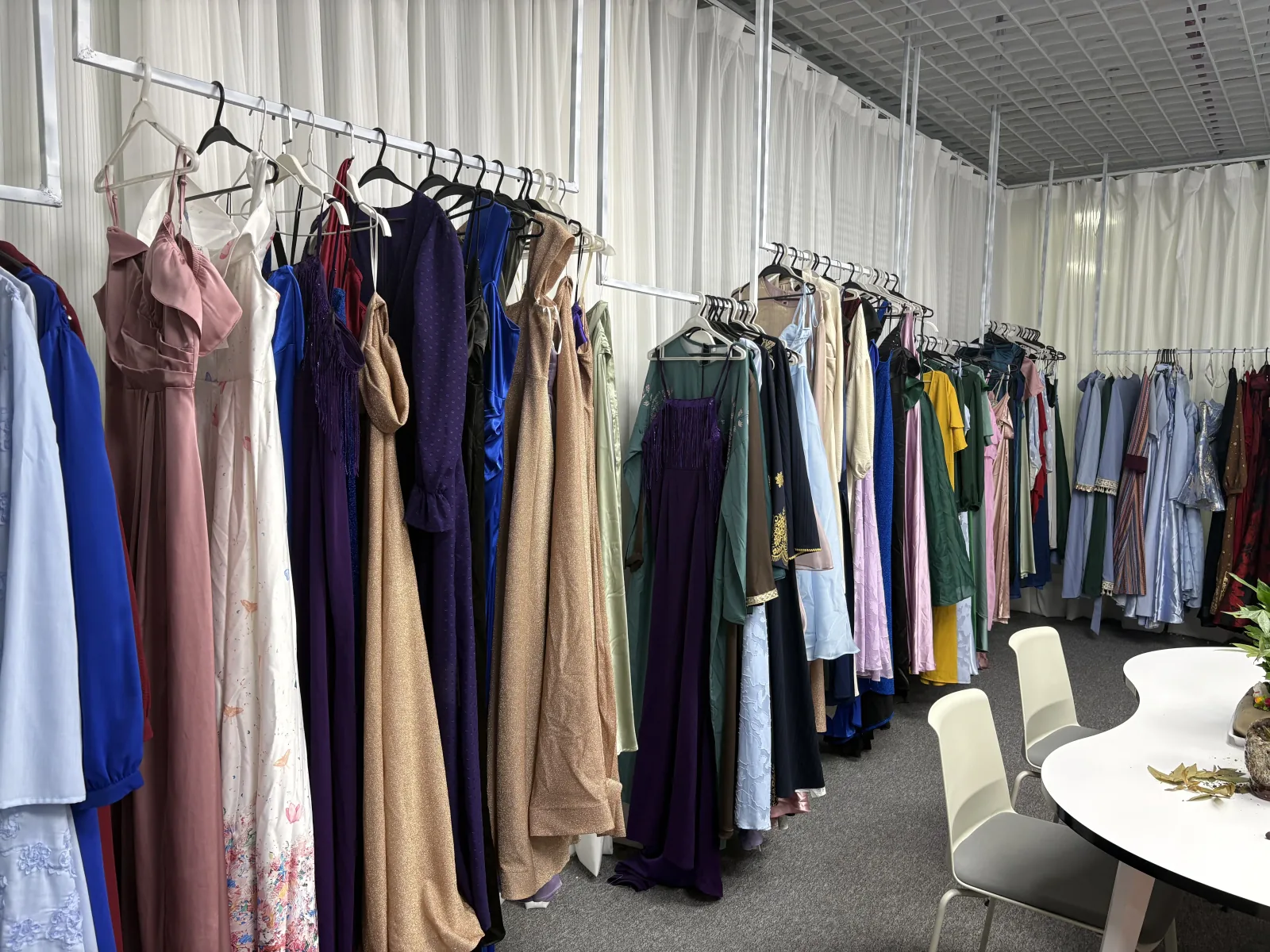
Bring your own specification for an OEM review, or discuss development from a showroom reference. Skirt projects are assessed against construction, materials, quantity and delivery needs. Pleated, bias-cut or other technically demanding designs require specific sample evaluation before production terms are confirmed.
Our service suits buyers who want a clear approved sample and a repeatable bulk specification. Discuss any specialist performance requirement at the beginning. For adjacent categories, explore custom dress manufacturing or the wider product and category range. International transport and destination arrangements should be agreed with your chosen freight forwarder under the order's delivery terms.
Custom Skirt Manufacturing FAQs
What is the MOQ for custom skirts?
Minimums are confirmed by style, color and material requirements. Send your quantity by color and size so we can assess garment production and any separate fabric or trim minimums. A collection total alone does not establish feasibility.
Can I start with a sketch or reference sample?
Yes, these can begin a development review. Measurements, materials, construction and branding still need to become an agreed specification before bulk production. Identify what you want to retain or change in the reference.
Does every skirt need a lining?
No. Decide from opacity, comfort, silhouette and intended use. When lining is selected, check its length, movement and care behavior together with the outer fabric. Approve the complete combination on the sample.
Will pleats keep their shape after washing?
That depends on the actual fabric, pleating process and care conditions. Review a processed sample after the agreed care procedure before making a retention claim. Fiber composition alone cannot guarantee permanent pleats.
How is fit checked across several sizes?
Agree the body measurements, finished-garment specifications and grade rules, then review appropriate sizes across the range. Check waistband position, hip movement, length and coverage. Approval of one sample size does not approve every size.
Can a skirt and matching top share the same fabric?
They may share suitable material and help consolidate purchasing. Confirm color consistency and allocation, while checking each style's production minimum separately. Shared fabric does not remove individual pattern and sample development.
Why might the final price change after sampling?
Sampling may clarify fabric consumption, lining, trims or construction that differed from the first estimate. Ask for revised pricing tied to the approved specification and quantities before authorizing bulk production.