How to Find a Clothing Manufacturer for Your Brand
A practical workflow to search, vet, compare, and partner with the right apparel factory. From initial planning to sampling, quality control, and shipping.
Finding the right clothing manufacturer can be a complex challenge for startup founders, online sellers, and growing private-label brands. To move successfully from an initial idea into reliable sampling and bulk production, you need a systematic approach. The most successful brands don't just "find a factory"—they evaluate category fit, properly format their Request For Quotation (RFQ), rigorously vet supplier capabilities, and set clear quality control and shipping terms.
In this guide, we provide a complete sourcing workflow designed to help you prepare your designs, filter out trading companies from genuine manufacturers, and establish a long-term production relationship.
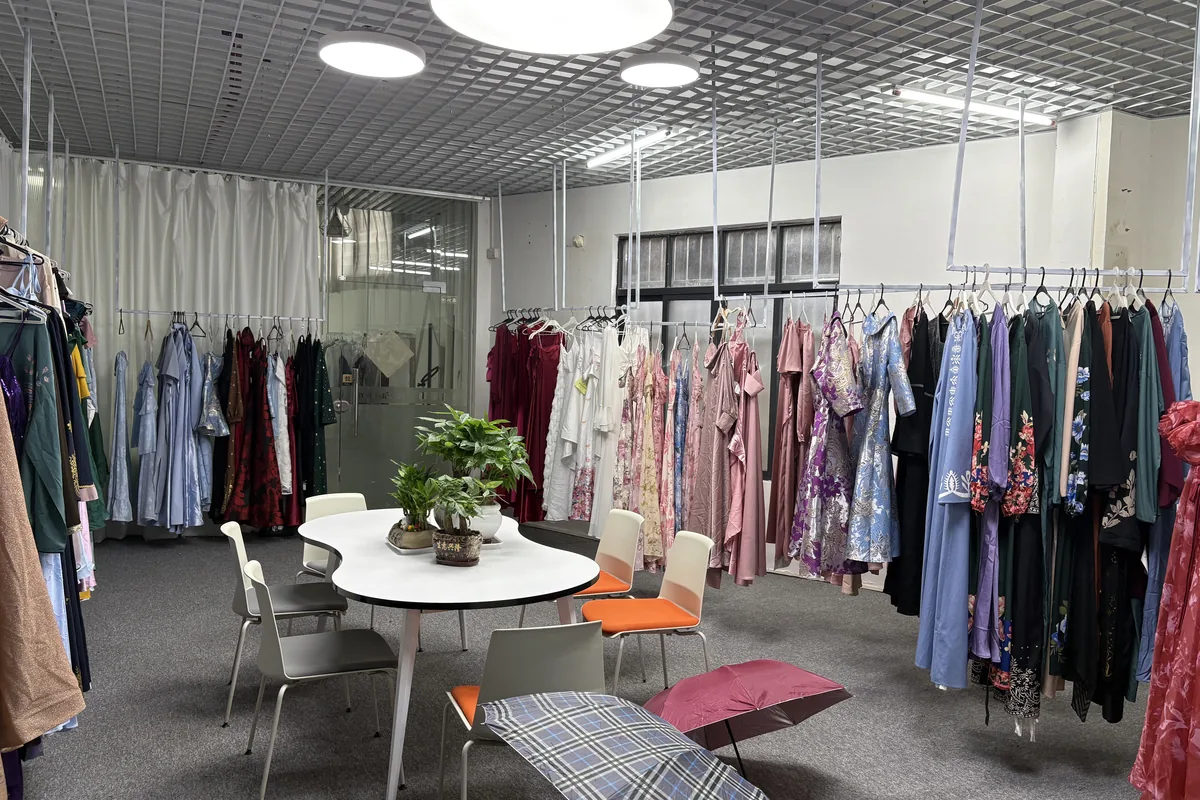
A showroom view helps buyers verify category fit before moving into RFQ and sampling.
The Search Workflow
Sourcing a clothing manufacturer should follow a logical sequence to minimize risk and miscommunication.
Define Your Product: Clarify category, fabric, trims, target price, and initial volume.
Search & Filter Channels: Identify potential partners through marketplaces, directories, and industry referrals.
Shortlist Candidates: Evaluate factories based on their category expertise and manufacturing type.
Send a Standardized RFQ: Provide the same Tech Pack and details to all candidates for accurate comparison.
Compare Quotes: Look beyond the base unit price to consider sampling fees, MOQs, and logistics.
Sample Approval: Run a paid sample to test communication, quality, and timelines.
Establish QC & Logistics: Agree on inspection standards (like AQL) and Incoterms before finalizing the bulk order.
Buyer Preparation Checklist
Before you begin reaching out to manufacturers, you must have your project details organized. Factories prioritize brands that communicate clearly and professionally.
Clear Tech Pack: Detailed technical drawings, measurements, grading rules, and construction callouts.
Target Materials: Desired fabric composition, weight (GSM), and trim specifications.
Target Order Volume: Initial trial order quantity and estimated MOQ for bulk.
Budget: A realistic target unit price based on your expected retail margin.
Timeline: Target dates for sampling, bulk production completion, and market launch.
Where to Find Manufacturers: Channel Comparison
Different sourcing channels offer distinct trade-offs between variety, trust, and vetting requirements.
Sourcing Channel
Examples
Pros
Cons
B2B Marketplaces
Alibaba, 1688, Global Sources
Massive variety, easy to search, transparent initial pricing.
High vetting burden; many trading companies disguise themselves as factories.
Industry Directories
Maker's Row, Sqetch, Sewport
Curated lists, often categorized by capability or region.
Can be limited in scope; some platforms charge access fees.
Requires travel time and budget; seasonal limitations.
Sourcing Agents
Independent agents, local agencies
On-the-ground support, negotiation, and factory vetting.
Adds a middleman fee; quality depends entirely on the agent's integrity.
Factory vs. Trading Company vs. Wholesaler
It is crucial to know who you are actually dealing with in the supply chain.
Genuine Factory (Manufacturer): Owns the production equipment and manages the labor directly. Best for customized OEM and private-label production, offering direct control over quality and timelines.
Trading Company: Acts as an intermediary, outsourcing your order to various factories. They can source a wide variety of products and handle complex logistics, but they add a markup and reduce your direct control over the production floor.
Wholesaler: Sells pre-made, off-the-shelf inventory. Ideal for immediate stock or basic blank customization, but they do not create original cut-and-sew designs.
None of these models is automatically bad. A wholesaler can be right for a boutique testing ready stock, and a trading company can help buyers who need many unrelated categories. The risk appears when the supplier type is hidden. If you are developing a custom garment, ask who owns the pattern work, who buys the bulk fabric, who manages sewing, who signs off the PP sample, and who is responsible for final inspection. Clear answers help you avoid comparing a real cut-and-sew quote with a reseller quote that looks cheaper only because key work is excluded.
Supplier Shortlist Criteria
When narrowing down your options, evaluate manufacturers against these core criteria:
Criteria
What to Look For
Category Expertise
Do they specialize in your product type (e.g., woven dresses vs. activewear)? Look at their past work.
MOQ Flexibility
Do their minimums align with your trial and scale-up plans?
Communication
Are their responses prompt, clear, and professional? Do they ask intelligent questions about your Tech Pack?
Production Capacity
Can they handle your volume if your brand scales rapidly?
Compliance & Audits
Do they support third-party audits and have transparent quality control procedures?
The RFQ Packet Checklist
Your Request For Quotation should be standardized to ensure you can compare apples-to-apples across different factories. Include:
Company introduction and brand positioning.
Comprehensive Tech Pack (or clear reference sample photos and specs).
Detailed Bill of Materials (BOM).
Required order quantities and size breakdowns.
Target delivery dates and required shipping terms.
Send the same RFQ packet to every shortlisted supplier. If one factory receives a vague photo and another receives a complete size chart, their prices will not be comparable. Include the intended sales market, label needs, packaging method, fabric target, colorways, and whether your quote should be EXW, FOB, or another term. For early-stage brands, it is acceptable to say which details are still flexible. A professional manufacturer can then separate firm requirements from options that can be adjusted to control MOQ or unit cost.
Comparing Quotes Beyond Unit Price
Do not simply choose the lowest unit price. A comprehensive comparison includes:
Sample Fees: What is the cost of prototyping, and is it deductible from the bulk order?
Tooling & Setup Costs: Are there one-time fees for custom molds, prints, or specific dyeing processes?
Lead Times: How long will sampling and bulk production actually take?
Payment Terms: What are the deposit and balance payment milestones (e.g., 30/70)?
Incoterms: Does the price include shipping to the port (FOB) or just making it available at the factory (EXW)?
Fit Sample: Evaluates the pattern, drape, and grading using available substitute fabrics.
Pre-Production (PP) Sample: The final prototype using the exact bulk fabric, trims, and finishes. This is your golden standard for the bulk run.
Approval Protocol: Require physical sign-off on the PP sample before any bulk fabric is cut.
Quality Control Before Shipment
Quality control should be systematic, not an afterthought. Establish clear standards early.
Inline Inspections: Checking garments during the sewing process to catch systemic errors early.
Final AQL Inspection: Utilize AQL 2.5 (Acceptable Quality Limit) or similar standard for random sampling and defect categorization before shipment.
Third-Party Audits: Ensure the factory allows independent inspection agencies to verify the final lot.
Shipping Terms and Logistics Boundaries
Understand your shipping terms to clarify cost and risk transfer.
EXW (Ex Works): The buyer assumes all responsibility and cost for transport from the factory door.
FOB (Free on Board): The factory covers costs and risks until the goods are loaded onto the shipping vessel at the origin port.
DDP (Delivered Duty Paid): The supplier handles all shipping, customs, and duties to the final destination (often less common for large bulk freight).
Red Flags and Safer Next Steps
Watch out for these warning signs during the vetting process:
Refusal to allow third-party quality inspections.
Extremely low prices that undercut the market average significantly.
Evasive answers regarding their actual manufacturing facilities or subcontracting practices.
Pressure to skip the sampling phase and rush straight to bulk.
Safer Next Step: Always start with a small, manageable trial order. Validate the factory's communication, sample quality, and adherence to timelines before committing substantial capital.
How to Verify a Manufacturer Before Paying a Deposit
Supplier verification should happen before the first sample payment, not after production problems appear. Start with low-friction checks: confirm the business name on the quotation, invoice, payment account, and export documents; ask for a live video call from the showroom, cutting area, sewing floor, or warehouse; and request recent examples in the same product category. A factory that understands apparel will ask about fabric, size range, construction, trims, labels, packing, and inspection terms before promising a firm price.
During the call, ask the supplier to explain one comparable order from inquiry to shipment. Listen for operational details: how the PP sample was approved, how fabric shade was controlled, how defects were corrected during inline inspection, and how final packing was confirmed. This conversation is often more useful than a generic certificate screenshot because it reveals whether the supplier understands the actual production path behind your product.
For China sourcing, also separate factory verification from logistics promises. Incoterms published by the International Chamber of Commerce and the International Trade Administration define how cost and risk are divided. A garment factory may be a strong manufacturing partner while still expecting the buyer or freight forwarder to handle customs, DDP routing, destination duties, and final delivery risk.
Decision Rule: Do Not Choose Until the Sample Confirms the Quote
A quote is only a plan on paper. Before scaling, use the first sample to confirm whether the supplier understood the garment, chose the right fabric direction, followed your measurements, and communicated problems early. If the sample exposes missing information, update the tech pack and quote assumptions before approving bulk. This keeps the relationship factual: both sides know what is being produced, what quality level is expected, and which costs belong in the final order.
Source Notes for This Guide
This guide follows common sourcing patterns described by apparel sourcing resources such as Sourcify's manufacturer due diligence guide, its overview of how apparel manufacturing works, and practical channel comparisons from sourcing and payments providers such as WorldFirst. For quality language, the page references AQL concepts explained by inspection providers such as QIMA. These external sources support the general buyer workflow; Mostnica-specific claims come from our own factory profile, current website pages, and production boundaries.
Where Mostnica Fits (and Does Not Fit)
Mostnica Garment is a practical Guangzhou-based fashion apparel manufacturer specializing in OEM/ODM production for everyday apparel.
Where We Excel: Fast-fashion womenswear, woven dresses, tops, pants, knit T-shirts, and hoodies. We support trial orders (around 100 pcs/style) and can smoothly scale to bulk programs of 3,000-50,000+ pieces. We maintain strict QC including fabric, inline, and final AQL checks, defaulting to FOB/EXW terms.
Where We Do Not Fit: We are not a fit for one-off Print-on-Demand (POD) items, ultra-luxury couture requiring bespoke hand-craftsmanship, or buyers expecting fully managed end-to-end DDP logistics without a freight forwarder.
Frequently Asked Questions
How do I know if a supplier is a real clothing factory?
Look for specific category expertise, ask for video tours of the production floor, request to see their business license, and verify if they own the cutting and sewing equipment rather than subcontracting everything.
What do I send before asking for a quote?
Provide a complete Tech Pack, including technical drawings, a Bill of Materials, sizing specs, target quantities, and a reference sample if available.
Why do MOQs change by fabric or color?
Fabric mills have their own minimum requirements for dyeing and knitting. If you require a custom Pantone color or unique fabric blend, the garment MOQ must increase to consume the minimum fabric order.
What sample should I approve before bulk production?
Always demand and approve a Pre-Production (PP) sample made with the exact bulk fabric and trims before authorizing the start of bulk manufacturing.
Ready to Start Your Production Journey?
Connect with Mostnica Garment to discuss your Tech Packs, sampling requirements, and how we can support your brand's growth.