Clothing Manufacturers in Guangzhou: How to Choose the Right Factory
Guangzhou is a remarkably strong sourcing region for fast-fashion womenswear, everyday apparel, woven dresses, tops, T-shirts, hoodies, and private-label programs that demand fast fabric access and practical sampling timelines. It is widely considered a cornerstone of the global apparel supply chain. However, it is less ideal for highly technical outerwear, luxury couture, and projects requiring custom-milled fabrics at very low quantities. Finding the best partner requires navigating a massive ecosystem of vendors.
The right Guangzhou clothing manufacturer should closely match your specific product category, your Minimum Order Quantity (MOQ) capabilities, your fabric sourcing strategy, your Quality Control (QC) standards, your communication expectations, and your export requirements before you ever pay a deposit. This guide is designed to help apparel buyers, from emerging brands to established labels, navigate the Guangzhou manufacturing landscape and make informed sourcing decisions.
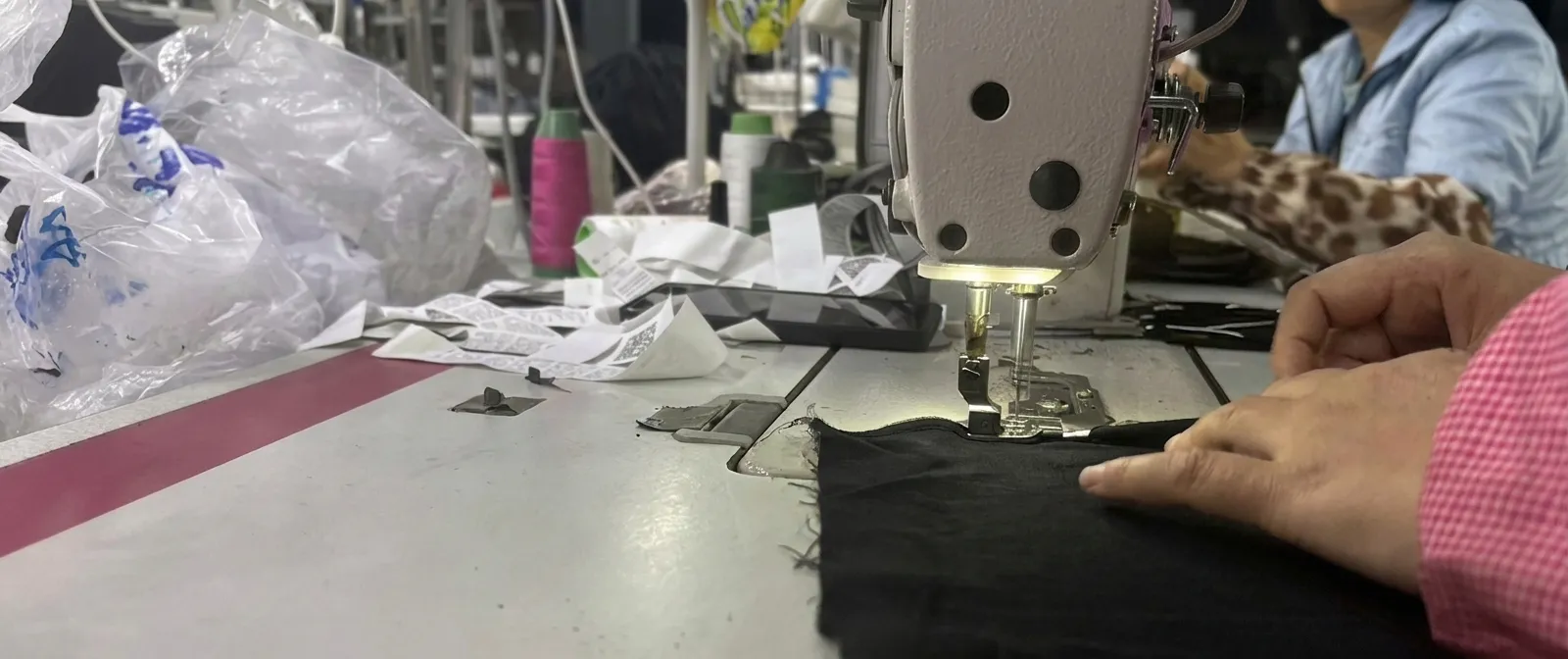
Quick Overview: When Guangzhou is the Right Fit
| Buyer Need | Guangzhou Fit | Why |
|---|---|---|
| Fast-fashion womenswear | Strong | Unrivaled fabric variety, abundant sample rooms, and rapid trend response capabilities. |
| Everyday dresses, tops, pants | Strong | Incredibly dense ecosystem of cut-and-sew workshops and trim suppliers. |
| T-shirts and hoodies | Good | Strong supporting knit supply chain and local decoration (print/embroidery) partners. |
| Small test orders | Good (if using stock fabrics) | MOQ is heavily dependent on fabric and trim availability; local stock fabrics allow for lower minimums. |
| Technical activewear / outdoor | Mixed | While some exist, highly specialized performance factories may be better sourced in other dedicated regions. |
| Luxury couture | Weak | Guangzhou excels in commercial fashion and volume production rather than high-end handcraft ateliers. |
What Makes Guangzhou Different As An Apparel Manufacturing Region
Guangzhou is the capital of Guangdong province and the historical center of the Pearl River Delta's manufacturing boom. What makes Guangzhou fundamentally different from other global apparel hubs is the sheer density and integration of its supply chain. It is not just a place where garments are sewn; it is a comprehensive ecosystem encompassing every stage of apparel creation.
For a buyer, this density translates into practical advantages. When a factory in Guangzhou needs a specific zipper, a particular lace trim, or a specialized pleating service, they do not need to order it from another province or country—they can often source it within a few kilometers. This localized cluster includes fabric mills, dying houses, sample rooms, independent pattern makers, massive wholesale markets for trend scanning, cut-make-trim (CMT) workshops, and larger integrated factories.
Furthermore, Guangzhou benefits from world-class export infrastructure, with massive ports and a dense network of export service providers and freight forwarders. While external macro contexts often discuss shifts in global manufacturing, widely described by sourcing guides as one of the largest textile centers, China—and Guangzhou specifically—remains a dominant force due to this vertical capability, flexibility, and speed. However, international buyers must still conduct careful landed-cost analyses, evaluate current tariffs, and perform rigorous risk checks to ensure Guangzhou aligns with their overall sourcing strategy.
Zhongda Fabric Market: Why It Matters, And What It Does Not Solve
You cannot fully understand Guangzhou apparel manufacturing without understanding the Zhongda fabric market. Located in the Haizhu district around Ruikang Road, just south of Sun Yat-sen University, Zhongda is not a single building. It is a sprawling textile district comprising numerous multi-story wholesale centers, thousands of showrooms, and countless smaller shops supplying fabrics, trims, accessories, and textile machinery.
The Benefits for Apparel Buyers
The primary advantage of Zhongda is speed and variety. When you provide a reference sample to a Guangzhou factory, their sourcing team can take it to Zhongda and find an incredibly close—if not exact—match within days. This allows for rapid comparison of handfeel, drape, weight, color, and trim options.
Because these vendors hold ready stock, factories can purchase small amounts of fabric (often by the roll or even by the yard) to produce samples quickly. For brands producing seasonal womenswear, fast fashion, and everyday apparel, utilizing in-stock market fabrics is the key to accelerating the development cycle and supporting lower MOQ trial orders.
The Limitations Buyers Must Understand
Despite its massive scale, Zhongda does not solve every sourcing problem, and relying heavily on market stock introduces specific risks. The most significant limitation is repeatability. Market fabric availability does not guarantee that the exact same fabric will be available six months later for a reorder. If a vendor clears their stock, your factory may have to find a new substitute, leading to variations in your product line.
Additionally, if your brand requires custom dyeing to match specific Pantone colors, or custom weaving for a proprietary blend, you bypass the advantage of in-stock fabrics and immediately trigger higher mill MOQs (often thousands of meters). Quality at Zhongda also varies wildly by vendor. It is entirely up to the buyer and the garment factory to request swatches, run lab dips, and conduct shrinkage and colorfastness tests.
Suggested Buyer Rule: Use local market fabrics for trial orders, fast-fashion injections, and when speed and low MOQ are critical. Transition to custom-developed fabric directly from mills only when your brand has the sales volume and the lead time necessary to control absolute consistency.
Guangzhou Supplier Types Buyers Will Encounter
When searching for "clothing manufacturers in Guangzhou," a buyer will encounter a confusing mix of business models. Many entities will claim to be a "factory," but their capabilities, pricing structures, and reliability differ drastically. Understanding these supplier types is crucial for aligning your expectations with reality.
| Supplier Type | What They Are Good For | Associated Risks | Best Buyer Fit |
|---|---|---|---|
| Wholesale Market Stall / Stock Vendor | Ready-made inventory, trend scanning, immediate purchasing, very low MOQs for existing designs. | Limited or no custom control, inconsistent lot quality, weak or nonexistent QC, difficult to build a unique brand. | Boutiques buying stock, small retailers needing immediate inventory, trend researchers. |
| Trading Company / Sourcing Agent | Broad supplier search, overcoming language barriers, consolidating multiple product categories into one shipment. | Added margin (higher unit cost), less direct visibility into the actual production floor, risk of unauthorized subcontracting. | Buyers needing broad procurement support across multiple distinct categories (e.g., apparel, electronics, and home goods). |
| Small Workshop (CMT) | Simple, low-volume sewing, very quick response times, low overhead costs. | Severe capacity limits, uneven process control, lack of in-house development/pattern making, vulnerable to disruption. | Very simple small runs, buyers with local agents who can provide daily on-site oversight. |
| Direct OEM/ODM Garment Factory | Custom product creation, pattern making, structured sampling, reliable repeat bulk production. | Requires the buyer to provide clear tech packs, maintain strict MOQ discipline, and manage communication effectively. | Brands building private-label production, established labels needing reliable capacity. |
| Integrated Trade-and-Manufacturing Factory | In-house development, dedicated showroom, robust sourcing resources, professional production coordination, and export support. | Buyers must verify exactly what is handled in-house versus what is outsourced to their partner network. | Buyers needing both sophisticated product development and scalable bulk execution from a single, professional partner. |
Mostnica operates within the Integrated Trade-and-Manufacturing factory category. Founded in 2008 and based in Panyu, Guangzhou, Mostnica bridges the gap between sophisticated product development and reliable bulk execution, offering showroom access, pattern development, and comprehensive OEM/ODM support.
What Guangzhou Clothing Manufacturers Are Usually Strong For
While Guangzhou is versatile, it truly excels in specific apparel categories where the local ecosystem provides a competitive advantage in speed, cost, and material availability.
Fast-Fashion Womenswear and Everyday Apparel
Guangzhou is often a strong fit for women's fast fashion. The proximity to the Zhongda market means that emerging trends can be translated from a concept to a physical sample within days. The local workforce is highly skilled in handling the diverse fabrics and complex styling often found in women's fashion.
Woven Dresses, Tops, Pants, and Skirts
The region has a massive concentration of factories specializing in woven garments. Whether it is a lightweight summer dress, a structured blouse, or casual trousers, Guangzhou suppliers have the pattern makers and the sewing expertise to execute these designs efficiently.
T-Shirts, Hoodies, and Casual Basics
While some buyers look to other regions for massive scale basics, Guangzhou remains a very competitive option for T-shirts, hoodies, sweatshirts, and casual wear, especially when those basics require complex washes, unique dye treatments, or specific local decoration techniques like puff printing, embroidery, or specialized appliqués.
Private-Label and Test-to-Bulk Programs
Guangzhou factories are excellent partners for private-label brands that utilize a "test-to-bulk" strategy. Because local fabrics allow for reasonable trial quantities, a brand can produce a small run to validate consumer demand before committing to a large-scale bulk order. This agility is a defining characteristic of the best Guangzhou manufacturers.
Note: Guangzhou can also be suitable for children's everyday apparel, provided the buyer assumes responsibility for dictating the strict safety and compliance checks required by their destination market.
What Guangzhou May Not Be Best For
To avoid wasted time and poor outcomes, it is equally important to understand where a Guangzhou clothing manufacturer may not be the optimal choice. Certain specialized products are better suited to other regions with different specialized machinery or labor skill sets.
- Highly Technical Outdoor Gear: Waterproof, seam-taped garments, and heavy technical outerwear often require highly specialized bonding machinery and rigorous waterproof testing facilities that are more commonly clustered in other specific regions of China or Southeast Asia.
- Specialty Performance Activewear: While basic activewear is fine, garments requiring seamless knitting technology, high-compression engineering, or lab-backed performance claims often require factories fully dedicated to technical sportswear.
- Heavy Workwear and PPE: Garments that require specific, legally mandated safety certifications (fire resistance, high visibility, cut resistance) should be sourced from factories specializing entirely in certified protective equipment.
- Luxury Couture and Artisan Craft: Guangzhou is optimized for commercial fashion and efficient bulk production. It is generally not the place to source hand-beaded bridal gowns, bespoke tailoring, or ultra-premium heritage craftsmanship.
- Ultra-Low MOQ Custom Fabric Projects: If you demand custom-milled, proprietary fabrics but only want to order 50 garments, Guangzhou (like anywhere else) will struggle to accommodate you due to the strict minimums imposed by fabric mills.
- Single-Piece Print-on-Demand: Guangzhou factories are structured for wholesale and bulk B2B production, not B2C direct fulfillment of single customized items.
Cost And MOQ Logic In Guangzhou
Minimum Order Quantities (MOQs) are the most frequent point of friction between buyers and factories. In Guangzhou, MOQ is rarely an arbitrary number set by the factory; it is a mathematical reality dictated by the supply chain.
Garment MOQ is primarily driven by fabric MOQ, trim MOQ, color count, size range, and the setup cost of specialized processes (like screen printing or embroidery). If you use a locally available stock fabric from the Guangzhou market, your MOQ can be relatively low—often determined by how many garments a single roll of fabric can yield. However, if you require a fabric to be custom-dyed to your specific Pantone color, the dyeing mill will enforce a minimum order (e.g., 500 or 1000 kilograms), which proportionally raises your garment MOQ.
Furthermore, small-batch production usually incurs a higher unit cost. The time required for pattern making, machine setup, cutting, QC inspections, and communication is relatively fixed. When these fixed costs are spread across 100 pieces, the cost per piece is significantly higher than when spread across 10,000 pieces. Factory line efficiency also drops with small runs, as workers have less time to optimize their sewing rhythm.
Mostnica's Approach to MOQ and Scaling
As an integrated OEM clothing manufacturer, Mostnica understands the need for brand growth. Depending on the style complexity and material availability, Mostnica can often review trial orders around 100 pieces per style to help brands test the market. However, Mostnica's true strength lies in supporting scalable growth; typical bulk programs are far more efficient and cost-effective at volumes ranging from 3,000 to 50,000 pieces per style, allowing brands to maximize their margins as they grow.
A realistic Request for Quotation (RFQ) should always compare the sample cost, the trial order unit cost, and the projected bulk reorder unit cost, while factoring in packaging, labels, freight terms, and inspection costs.
How To Vet A Guangzhou Clothing Manufacturer
To safely navigate the Guangzhou market and separate true manufacturing partners from middlemen or unreliable workshops, buyers should employ a rigorous vetting process. Use this 10-point checklist before making any commitments:
- Request Official Documentation: Always ask for the Chinese company name and business license. Verify that their registered business scope includes manufacturing, not just trading.
- Verify the Location and Site: Ensure the factory address matches their claims. A true factory will have a distinct industrial footprint, unlike a small office in a commercial high-rise.
- Request a Live Video Tour: Do not rely on highly edited promotional videos. Ask for a live video call to walk through the showroom, pattern room, cutting tables, sewing lines, QC area, and packing warehouse.
- Identify the Sample Room vs. Bulk Production: Ask explicitly who owns the sample room and who will sew the bulk production. Some agents have beautiful sample rooms but outsource all bulk sewing to unverified third parties.
- Test Technical Communication: Send the same detailed tech pack to multiple suppliers. Evaluate them based on the clarifying questions they ask, not just the final price. A good factory will point out potential construction issues.
- Confirm Fabric Sourcing Protocols: Discuss how fabric will be sourced, the process for swatch approval, the requirement for shrinkage and colorfastness testing, and the rules for replacing defective fabric before cutting.
- Define the Approval Milestones: Put in writing the required stages of approval: First Prototype Sample, Pre-Production (PP) Sample, Size Set approval, and Top of Production (TOP) sample.
- Establish the QC Standard: Do not rely on vague promises of "high quality." Put a specific standard in writing, such as AQL 2.5, detailing how inspections will be handled.
- Confirm Third-Party Audit Acceptance: Ask if the factory welcomes independent, third-party quality inspections before shipment. A refusal is a major red flag.
- Clarify Export and Payment Terms: Confirm the payment schedule, understand whether the terms are FOB or EXW, clarify the role of the freight forwarder, and determine who handles export documentation.
Critical Warning Signs
- The supplier says "Yes" to every single style you submit, regardless of category, and offers an impossibly low price.
- They ask zero technical questions about fabric weight, measurement tolerances, or trim specifications.
- They refuse a live video tour or push back against third-party inspections.
- The bank account name provided for the deposit does not match the registered company name on their business license.
- The sample fabric is significantly different from the fabric quoted for bulk production.
- They give vague, evasive answers about where the actual production takes place.
Comparison Criteria: Evaluating Your Options
Use the following criteria matrix when comparing different suppliers you have engaged in Guangzhou. This will help you objectify your decision-making process.
| Criterion | Why It Matters | Strong Evidence to Request | Weak Signal / Red Flag |
|---|---|---|---|
| Product Category Fit | Factories are not universal; a great denim factory may ruin a silk dress. | Similar physical samples, recent production line photos of similar garments. | Only providing polished catalog screenshots with no factory context. |
| Fabric Access | Directly controls your MOQ, production speed, and material cost. | Physical swatches, supplier sourcing cards, detailed shrinkage notes. | The supplier says "Any fabric is OK" without asking for specifics. |
| MOQ Logic | Prevents surprise price hikes when moving from sample to bulk. | A detailed breakdown of MOQ by style, color, fabric roll, and trim. | Providing a single, vague MOQ number for the entire project. |
| Sampling Process | Predicts how well they will control the bulk production. | An in-house pattern room, clear sample timeline, defined revision rules. | Outsourced sampling with no technical notes returned to the buyer. |
| QC System | Reduces the risk of sample-to-bulk quality drift. | Documented incoming material checks, inline inspection, final AQL acceptance. | Relying solely on a rapid final visual check before packing. |
| Communication | Prevents expensive technical errors caused by misunderstandings. | Proactive written questions, clear milestone updates, professional English. | Extremely fast replies that contain no actual detail or confirmation. |
| Export / Logistics | Clarifies risk and financial responsibility during shipping. | Clear FOB/EXW terms, coordination with your forwarder, proper documents. | Promising "door to door" delivery without specifying terms or liabilities. |
| Scale Path | Crucial for brands executing a test-to-bulk strategy. | Transparent pricing tiers for trial orders and subsequent bulk reorders. | No plan or interest in discussing bulk production scaling. |
Guangzhou vs. Alternative Manufacturing Hubs
When looking at manufacturer comparison options, it is helpful to understand how Guangzhou compares broadly to other regions in China.
| Region | Generally Better For | Watch Out For |
|---|---|---|
| Guangzhou | Fast fashion, womenswear, accessing market fabrics, rapid sampling, everyday apparel. | Quality varies wildly; high density of middlemen posing as direct factories. |
| Dongguan / Humen | Some activewear, streetwear, established private label apparel programs. | Ensure you verify their specific category specialization. |
| Shenzhen | Design-led fashion, ecommerce brands, higher-cost service ecosystem. | Production is often outsourced to cheaper nearby cities; higher baseline costs. |
| Foshan / Zhongshan | Supporting production, casualwear, knitwear, nearby capacity overflow for Guangzhou. | Can be less visible and less accustomed to dealing directly with overseas buyers. |
| Zhejiang (Keqiao / Hangzhou) | Massive fabric scale, heavy knits, sweaters, higher-volume textile programs. | Can be less agile for the rapid, trend-based sampling that Guangzhou excels at. |
Where Mostnica Fits Among Guangzhou Clothing Manufacturers
Mostnica, founded in 2008 as the overseas service brand of Guangzhou Fulai Apparel Technology Co., Ltd., is positioned to serve a specific segment of the global apparel market effectively. Based in Panyu, Guangzhou, Mostnica operates an integrated trade-and-manufacturing model, boasting a dedicated development team, an expansive showroom, and direct manufacturing capabilities.
The Ideal Fit for Mostnica
- Buyers needing a dependable Panyu/Guangzhou-based OEM/ODM partner for affordable, value-conscious everyday apparel.
- Brands focusing on fast-fashion womenswear, woven dresses, tops, pants, and casual apparel.
- Projects requiring T-shirts, hoodies, sweatshirts, and private-label basics as core or supporting categories.
- Buyers who want to utilize a showroom for ODM selection, or who require precise OEM development from a tech pack or reference sample.
- Buyers who value practical sampling timelines (often about 5-8 days when fabric and trims are available), robust fabric-market sourcing support, strict AQL 2.5 quality control, and a strategic test-to-bulk planning approach.
- Professional buyers who can clearly communicate their target price, quantities, fabric direction, size ranges, packaging needs, and delivery windows.
When Mostnica is Not the Right Fit
- Brands seeking luxury couture, hand-beaded bridal wear, or premium artisan craft production.
- Businesses operating on a single-piece print-on-demand model.
- Projects involving highly complex, technical sportswear or extreme outdoor performance gear (unless the scope is thoroughly reviewed and explicitly confirmed).
- Buyers demanding unsupported certifications or complex sustainability claims without providing their own verified material supply chain.
- Buyers expecting the factory to assume full liability for international customs, DDP shipping, or destination-side compliance without utilizing a dedicated freight forwarder and a written logistics agreement. Mostnica operates on FOB and EXW terms.
- Inquiries with no reference sample, no fabric direction, no estimated quantity, and no defined timeline.
Ready to start your production journey in Guangzhou?
Send Mostnica your tech pack, reference sample photos, target quantity, fabric direction, and delivery window for a practical, honest Guangzhou factory-fit review.
For appointments, material records, factory visits, and sample approvals, follow the Guangzhou clothing factory sourcing guide.
Frequently Asked Questions
Is Guangzhou a good place to find clothing manufacturers?
Yes, for fast-fashion womenswear, everyday apparel, rapid sampling, leveraging market fabrics, and executing practical OEM/ODM programs, Guangzhou is an exceptionally strong sourcing region. However, it is not automatically the best region for every garment type; highly technical outerwear or luxury couture may be better sourced elsewhere.
What is the difference between a Guangzhou clothing factory and a wholesale market supplier?
A true direct clothing factory develops and produces custom goods based on your unique designs, tech packs, and quality requirements. A wholesale market supplier, on the other hand, usually sells existing, ready-made stock or acts as a trader. While both have their uses, brand building typically requires a direct factory relationship.
Why is Zhongda fabric market important for Guangzhou apparel production?
The Zhongda fabric market gives local factories immediate access to thousands of fabric and trim options. This massive local inventory accelerates the sampling process and allows brands to execute stock-fabric trial orders with lower MOQs. However, quality and repeatability can vary, so consistent checks remain essential.
What MOQ should I expect from Guangzhou clothing manufacturers?
MOQs are highly variable and depend on the fabric type, trims, color count, size range, style complexity, and whether you are using stock or custom-milled fabric. For Mostnica, trial orders around 100 pieces per style may be reviewed depending on the exact style and materials, while typical bulk production programs are highly efficient between 3,000 and 50,000 pieces per style.
How do I know if a Guangzhou supplier is a real factory?
You can verify a factory by checking their Chinese business license, requesting a comprehensive live video tour of the production floor and sample room, asking explicitly who handles the bulk sewing operations, and confirming that their bank account name perfectly matches their registered company name.
Can Guangzhou factories produce private-label clothing?
Yes, many factories in Guangzhou specialize in private-label OEM production. However, to ensure success, it is entirely the buyer's responsibility to clearly define labels, hangtags, packaging requirements, fabric specifications, sizing rules, and QC standards prior to initiating bulk production.
Should I use a freight forwarder when sourcing from Guangzhou?
Absolutely. Utilizing a trusted freight forwarder is highly recommended for handling international shipping, managing customs clearance, navigating DDP terms, and mitigating destination-side risks. Mostnica actively cooperates with buyers' designated freight forwarders and supports standard FOB and EXW export terms.
When should I choose another manufacturing region instead of Guangzhou?
You should consider looking outside of Guangzhou for highly technical outdoor gear, heavy workwear requiring strict safety certifications, specialized seamless activewear, luxury couture, or massive custom fabric programs that lack the volume required by major mills. These niches often require specialized machinery clusters found in other regions.