Guangzhou sourcing / Buyer field guide
Guangzhou Clothing Factory Guide: Plan Your Visit and First Production Order
Start with your product brief, arrange meetings with suitable suppliers, and separate fabric sourcing from actual production-site visits. Before approving bulk production, bring the materials, sample, quotation, inspection plan, and delivery responsibilities into one written record.
A successful Guangzhou sourcing trip leaves you with decisions you can execute after returning home. The same approach works remotely: use physical samples, live discussions, and documented approvals to connect what you selected with what the factory will make. This guide follows that sequence, from booking a meeting to handing finished goods to your freight forwarder.
For a broader assessment of regional fit and supplier models, first compare clothing manufacturers in Guangzhou. Here, the focus is the work to complete before, during, and after a sourcing visit.
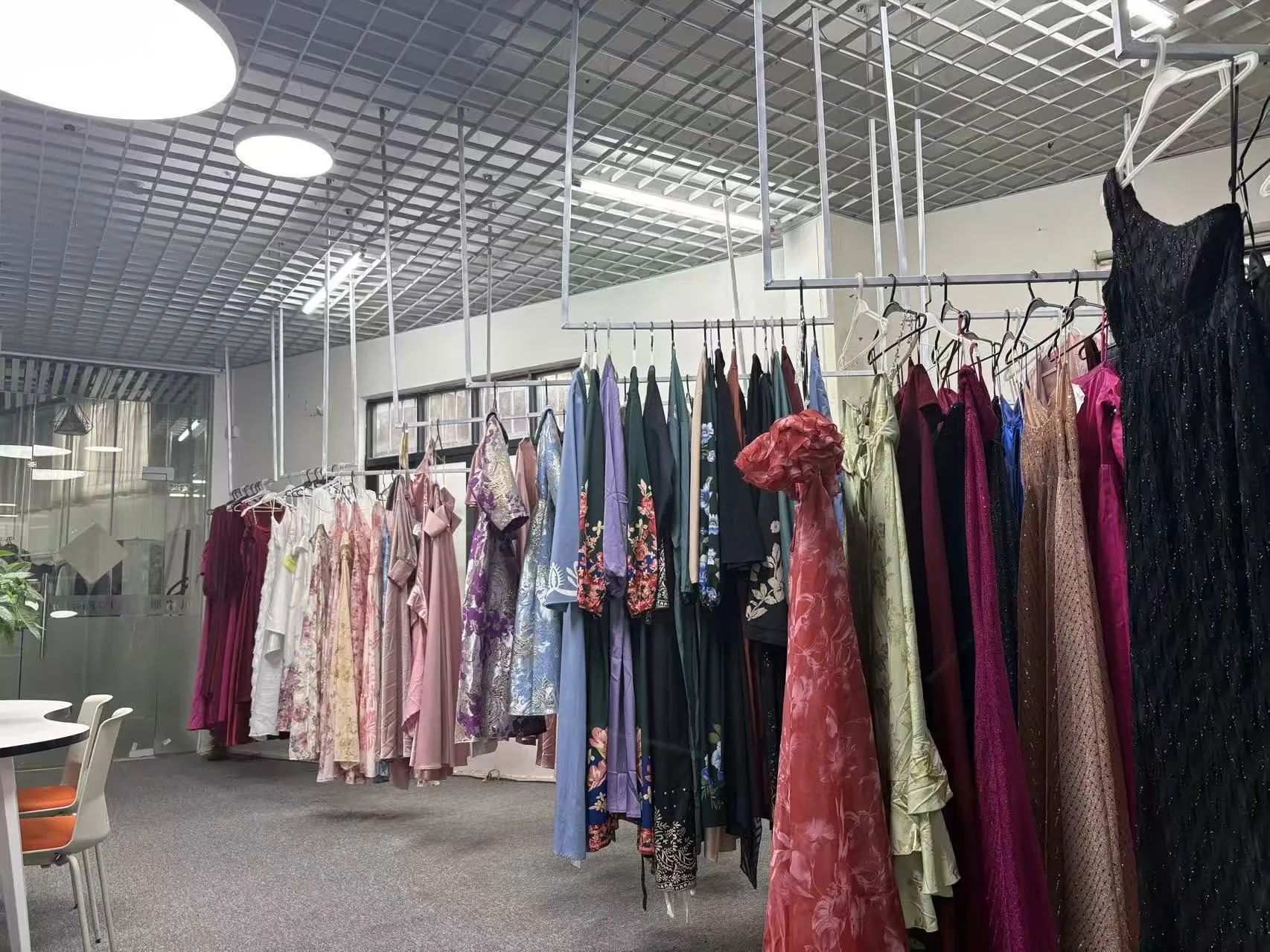
1. Decide What You Need Before Booking a Meeting
Tell suppliers whether you want existing stock, modifications to a showroom design, or a garment developed to your own specification. These are different assignments. A seller with attractive ready-made clothing may be useful for wholesale purchasing without offering the pattern development, material control, or repeat production your custom project needs.
Send one clear brief to every candidate
Prepare a reference garment or design images, target fabric, size chart, and quantities by style, color, and size. Include printing, embroidery, labels, packaging, destination market, and the date you need goods ready for the next logistics stage. Distinguish requirements that are fixed from choices where you welcome alternatives. Our tech pack preparation guide explains how to organize those details.
If you only have photographs, label the request as an initial feasibility review. Ask what information the supplier needs to develop a sample and firm quotation. A photograph cannot reliably communicate fabric weight, inside construction, stretch, or the measurements behind the fit.
Confirm the purpose of each appointment
Request the Chinese company name, exact address, building and floor, map location, contact telephone, and meeting language. Specify whether you need to see a showroom, sample room, sewing facility, or several locations. Ask who will attend: a technical question may need the pattern maker or production manager as well as the salesperson.
Share your agenda before travelling. A factory protecting another customer's designs may reasonably restrict photography or access to particular lines. Agree whether anonymized records, relevant sample work, or a separate production review can answer your questions.
2. Match Each Guangzhou Location to a Sourcing Task
Guangzhou's supply chain includes distinct material markets, finished-garment markets, and manufacturing clusters. The Guangzhou industry authority identifies Zhongda with fabrics and accessories, Baima, Shahe, and Shisanhang with finished-garment trading, and areas including Panyu Nancun and Zengcheng Xintang with production clusters. Use these distinctions to plan meetings, rather than expecting one market to perform every role.
| Location or stop | Useful task | Record before leaving |
|---|---|---|
| Haizhu / Zhongda | Compare fabrics, trims, colors, and material options. | Supplier contact, article number, swatch reference, purchase unit, and replenishment conditions. |
| Pre-arranged Panyu meeting | Discuss development, pattern changes, production responsibilities, and relevant facilities. | Sample actions, actual production addresses, process owners, and unresolved questions. |
| Finished-garment market | Review existing products and identify wholesale or potential ODM contacts. | Style reference, stock versus production terms, customization scope, and reorder conditions. |
| Xintang / Zengcheng, when relevant | Meet suppliers for a denim project and discuss washing arrangements. | Wash reference, responsible processing site, shade expectations, and testing plan. |
The Haizhu government's description of Zhongda treats it as a textile business district with material trading and related design activities. It is not a single factory. Similarly, a market contact still needs to explain who develops and produces a custom order.
For a specific finished-garment stop, Baima's own contact page lists its address as 16 Zhannan Road, Yuexiu District. Reconfirm current opening arrangements before travel. Your supplier's showroom and production address may be elsewhere.
Xintang is relevant to denim, but do not assume every supplier operates its own washing facility. The Guangzhou environmental authority's account of the area's industry describes substantial historical changes to washing and dyeing operations. Check the actual processing arrangement for your order.
3. Build a Schedule Around Decisions
Arrange your most important supplier meetings before booking a tightly packed itinerary. Group appointments by confirmed address, allow time for discussion and travel, and leave room to revisit a material choice. The schedule below is an illustrative allocation of tasks, not a promise that sourcing, sampling, or approvals can finish in three days.
| Stage | Main work | Useful outcome |
|---|---|---|
| Before arrival | Send the brief, discuss suitability, and confirm meeting scope and addresses. | Appointments with suppliers willing to review your actual product and quantities. |
| Day one | Review shortlisted materials; add a garment-market visit only if it supports your sourcing model. | Numbered swatches and a material comparison record. |
| Day two | Hold technical and production meetings at the agreed locations. | A sample action list and a clear account of where each process happens. |
| Day three | Resolve key questions, compare quotation scope, and agree the next development steps. | A sample order or follow-up plan with responsible people and dates. |
A buyer with nominated fabric may skip the market day. A denim buyer may allocate a separate appointment to washing development. A wholesale buyer may need more time reviewing stock and replenishment. Adapt the route to your product instead of collecting unrelated contacts.
At the end of each meeting, read back the agreed actions together. Record which decisions are approved, provisional, or awaiting a sample. Your flight home is not a production-approval deadline: unresolved fabric or fit questions should remain open until the required evidence arrives.
4. Connect the Meeting to the People Making Your Order
Start by identifying the company you would contract with and its relationship to the facilities you are seeing. Ask who makes patterns, purchases fabric, cuts and sews the garments, handles specialist processes, and checks the finished goods. Record any separate sites or production partners.
Follow a relevant product through the process
Bring questions from your own garment. For a woven dress, discuss lining, zipper installation, fit, and pressing. For a printed T-shirt, discuss fabric behavior, artwork approval, and print checking. Relevant work and a coherent explanation tell you more than a general tour of machines that your product will never use.
Ask how an approved sample reaches the line and how operators learn about a revision. Request an example of a measurement check or defect record with confidential customer details removed. Discuss how the team separates approved materials from materials waiting for confirmation, and who can authorize a substitution.
Clarify production responsibility and available capacity
A trading company or integrated trade-and-manufacturing supplier can coordinate a useful production network. The practical issue is whether responsibilities and access are clear. Ask which facility is planned for your order, what work is subcontracted, and whether you or your inspector can review the relevant site.
Total machine or employee counts do not establish available capacity for your delivery window. Ask when materials must arrive, when the line could be scheduled, what approvals are required, and what happens if a specialist process is delayed. Keep estimated timing separate from a confirmed production plan.
Cross-check the contracting name, company documents, quotation, and payment instructions. If different entities are involved, request an explanation and supporting authorization. A difference needs resolution; a matching name alone does not prove production capability. Broader verification steps are covered in our China factory sourcing and audit guide.
5. Turn Market Swatches into a Material Record
Give every shortlisted fabric an internal reference before it leaves the market or sample room. Attach that reference to the physical swatch, supplier quotation, photographs, and garment development notes. Otherwise, a conversation about “the softer blue fabric” can become difficult to reconstruct when several suppliers offer similar options.
| Record field | What to capture | Decision it supports |
|---|---|---|
| Identity | Your swatch ID, supplier name, article number, and color or lot reference. | Whether a later quotation or delivery refers to the same material. |
| Specification | Declared composition, structure, weight, usable width, finish, and test status. | Suitability, garment consumption, and checks still needed. |
| Commercial basis | Price unit, currency, minimum purchase, current stock, and validity. | Whether quotes are comparable and enough fabric can be secured. |
| Continuity | Replenishment route, expected availability, and substitution approval requirements. | Whether the material supports a repeat program. |
| Approval | Retained swatch, required tests, decision owner, date, and approved use. | What may be purchased or released to production. |
Consider two fabrics that look similar on a display card. Different usable widths can change consumption; different finishing or dye lots can affect the finished appearance. Ask the factory to evaluate the actual options for the garment rather than treating the lowest price per meter as the lowest garment cost.
Separate supplier declarations from verified results. Decide which composition, shrinkage, colorfastness, or other tests your product requires with the appropriate testing provider. QIMA's apparel services distinguish laboratory testing from product inspection and supplier auditing; one activity does not replace the others.
Before bulk purchasing, confirm that the proposed production material corresponds to the approved reference. State what happens if stock runs out or a substitute is suggested. A supplier should send the alternative for review, with any cost, fit, testing, and timing consequences, before using it.
6. Compare the Full Quote and Freeze the Approved Sample
Compare quotations against one version of your product specification. Write down quantity by style and color, size distribution, material choice, decoration, labels, and packing. Request separate clarification for sampling, revisions, testing, inspection, and any special tooling or setup charges. A lower unit price is difficult to assess when those items are treated differently.
Ask how minimum quantities apply. A quoted total may refer to a style, a color, a fabric purchase, or a shared program. There is no single Guangzhou MOQ that resolves all these constraints. Reducing color options or using suitable available materials may change feasibility, but request a revised quotation rather than assuming a reduction.
Approve the product, not just the photographs
Define the purpose of each sample round. A development sample may establish construction or fit before final trims are available. Record those limitations so that an encouraging first review is not mistaken for permission to start bulk production. When reviewing changes, use numbered comments and a dated measurement sheet.
The production approval should identify the physical sample, material references, measurements and tolerances, color standard, trims, artwork, labels, and packing instructions. Keep a corresponding reference with the factory and make it available to the inspection team. List any agreed deviations explicitly.
If you change a fabric or measurement after approval, issue a new version and ask the factory to confirm effects on price, purchased materials, and timing. Avoid scattering approvals across unlabelled chat photographs. A short change log helps both sides identify which instructions remain current.
Build the schedule from approval gates: material confirmation, sample sign-off, production allocation, inspection, any correction work, and dispatch. Distinguish a production estimate from a date confirmed after the prerequisites are met.
7. Use the Same Evidence When Sourcing Remotely
Remote sourcing works best when the meeting has a defined agenda. Ask for a live walkthrough of the agreed facilities, discuss your sample on camera, and request the relevant documents before the call. Record the address and participants so that a later production or inspection visit can be linked to the same arrangement.
Use video for discussion and observation, then send physical samples for the decisions it cannot settle. Screen color, lighting, and image compression make a video an unreliable substitute for approving shade or handfeel. Number mailed swatches and samples so both parties can identify exactly what is being discussed.
For important gaps, consider an independent site review or production inspection with a scope tied to your concerns. A remote tour cannot establish every condition, and a site visit does not guarantee a future batch. Retain the same approval file, material records, and responsibility list that you would maintain after travelling.
8. Plan Inspection and Freight Handover Early
Agree the inspection plan before production. Define the reference sample, measurement methods, tolerances, defect categories, packaging checks, and sampling arrangement. Identify who receives the report, who decides on acceptance, and how corrections or repeat inspections will be handled.
QIMA describes inspections at initial production, during production, before shipment, and during loading. Choose stages according to the risks of the order. A late inspection can identify finished-product problems, but it leaves less opportunity to address a recurring issue before most units are made.
AQL sampling supports a defined lot-acceptance decision; it does not guarantee that every garment is defect-free. Do not interpret AQL 2.5 as automatic permission to deliver 2.5% defective goods. Use the garment inspection guide to discuss sampling and acceptance with your inspection provider.
Name the delivery point and the responsible party
Include the agreed trade term, version, and named place or port in the quotation and order. Confirm who arranges collection, loading, export documentation, international freight, and destination clearance. Your freight forwarder needs the shipment details and readiness date, not simply the garment production estimate.
The ICC Academy explains that FOB applies to sea or inland-waterway transport and delivery on board the vessel; it also recommends considering FCA when containerized goods are handed over at a terminal. ICC's EXW explanation places delivery at the named location without a default obligation to load the collecting vehicle or clear exports. Match the term to the actual handover.
9. Preparing a Sourcing Meeting with Mostnica
Mostnica is the overseas service brand of Guangzhou Fulai Apparel Technology Co., Ltd., based in Panyu, Guangzhou. Our integrated trade-and-manufacturing model focuses on practical export apparel production, especially fast-fashion womenswear, woven dresses, tops, and pants. T-shirts, hoodies, sweatshirts, and sweater projects can also be reviewed for suitability.
We support OEM development from buyer references and ODM selection or modification through our showroom. Guangzhou development and sample work can connect with production at other bases, including Jiangxi and Zhongshan. Confirm the intended production arrangement for your category and order; a Guangzhou meeting does not mean every manufacturing stage takes place in Guangzhou.
Send your references, material direction, quantity by style and color, size range, packaging requirements, and delivery window before arranging a meeting or video review. We assess trial quantities against the style and materials. Our workflow includes material checks, sample confirmation, production checks, final inspection, and support for third-party factory reviews.
Discuss the available visit scope and appropriate location in advance. For international shipment, Mostnica can cooperate with your freight forwarder and provide agreed shipment documents. Our usual quotation basis is FOB, with EXW considered when appropriate; confirm the named delivery point and responsibilities for your order.
Frequently Asked Questions
Which parts of Guangzhou should I visit for fabrics and garment production?
Zhongda in Haizhu is a starting point for fabric and trim sourcing. Book production meetings at confirmed factory addresses, including relevant suppliers in Panyu or other districts. Add a Xintang appointment when a denim project requires it. Choose the route around your product and scheduled meetings.
Can I find a custom factory by walking around a wholesale market?
A market can introduce suppliers and existing products, but a custom order requires further checks. Confirm who develops the sample, where production happens, what customization is available, and how materials and repeat orders will be controlled.
What should I send before a factory meeting?
Send a tech pack or clear references, fabric requirements, a size chart, quantities by style and color, destination market, packaging needs, and target delivery window. Identify which choices are fixed and which can change after the supplier's review.
Do I need a translator or sourcing agent?
That depends on the meeting language and the technical work involved. If you hire support, agree the scope, fees, supplier relationships, and ownership of records beforehand. Make sure important specifications and approvals are documented in a form both buyer and supplier understand.
Can I approve fabric from a video call?
Use video to discuss options, but physical references and appropriate testing are needed for decisions such as shade, handfeel, and performance. Confirm the proposed bulk material and lot arrangement as well as the original sample swatch.
Is visiting the factory enough to confirm my order's quality?
No. A visit helps you understand the production arrangement, but the order still needs clear specifications, sample approval, suitable production checks, and an agreed final inspection plan. Arrange any necessary product testing separately.
Can I source from Guangzhou without travelling there?
Yes. Combine a clear product brief, live supplier discussions, physical samples, documented approvals, and independent checks where needed. Keep the same material and production records you would use after an in-person visit.
Plan Your Next Factory Conversation
Send Mostnica your garment references, fabric direction, quantity breakdown, and delivery window. We can review product suitability and discuss the right next step for a showroom, development, or production meeting.
Send Your Sourcing BriefContinue Planning
Browse the clothing manufacturer guides for related sourcing and production decisions. Keep your next action specific: resolve a material question, confirm a sample revision, or assign an inspection responsibility before moving to the next stage.