China Sourcing Guide
Best Dress Manufacturers in China for OEM/ODM Fashion Brands
Finding the best dress manufacturer in China means looking past generic factory lists to find the right partner for your specific dress category. In this comprehensive guide, we compare top China dress manufacturers by their core strengths, category fit, MOQ constraints, sampling speeds, and precise quality control protocols to help you make an informed sourcing decision.
Short Answer / Quick Picks
The "best" dress manufacturer in China entirely depends on your dress type, brand positioning, and order model. A factory producing luxury bridal gowns will struggle with fast-fashion timelines, and a large-volume t-shirt factory will lack the technical skill to sew complex smocked dresses. Here are the quick recommendations based on different buyer needs:
- Mostnica Garment: Best for affordable fast-fashion dresses, simple-to-medium complexity woven dresses, and private-label daily fashion. Excellent for brands needing Guangzhou-based OEM/ODM sampling with flexible test-to-bulk programs.
- H&Fourwing: Best for higher-detail women's dress development and high-end positioning requiring premium construction techniques.
- Hongyu Apparel: Best for broad category custom clothing, offering wide private label coverage across diverse garment types beyond just dresses.
- D&J Fashion: Best for integrating into the Guangzhou women's fashion and fast-fashion supply chains, known for rapid trend adaptation.
- Huasha Bridal (or similar specialists): Best for bridal wear, wedding dresses, and highly detailed premium formal gowns.
- ODMYA: Best for larger-volume, mass-manufacturing programs where massive standardized scale is prioritized over small trial flexibility.
Caveat: Always verify current Minimum Order Quantities (MOQ), exact sample lead times, required certifications, and current factory capacity directly with the supplier before committing to an order.
How We Compared China Dress Manufacturers
If you search online for the "best dress manufacturer," you will find countless listicles ranking factories. However, most of these rankings are supplier-owned content where the publisher simply places their own factory at number one, followed by a random assortment of trading companies, sourcing agents, and generic cut-and-sew facilities. They often lack objective methodology and fail to address the highly specific nuances of manufacturing women's dresses.
Instead of providing an arbitrary ranking, this guide uses a criteria-led approach. We compared these suppliers across multiple critical dimensions that directly impact your brand's success:
- Dress Category Fit: Dress manufacturing is not a monolith. We categorized factories based on whether they specialize in casual dresses, fast fashion, bodycon stretch styles, resort wear, party dresses, or intricate bridal/formal gowns.
- OEM/ODM and Private Label Service Scope: We evaluated their ability to handle tech packs, custom pattern development, fabric sourcing, and private labeling (main labels, size tags, care instructions, and custom packaging).
- MOQ and Scaling Logic: We looked beyond just the lowest number. We examined whether the factory supports trial orders (e.g., test runs around 100 pieces) and if they use a per-color or per-style logic, as well as their capacity to scale smoothly from sample to repeat bulk.
- Sampling and Fabric Sourcing: A factory is only as good as its sample room. We considered their workflow for pattern development, Pre-Production (PP) sample creation, and their access to major fabric markets for quick material sourcing.
- Dress-Specific QC: Dresses require specialized quality control, including managing fabric shrinkage, ensuring opacity for light colors, testing zipper strength, maintaining hem balance, and ensuring sample-to-bulk measurement consistency.
- Sourcing Ecosystem: Location matters. A factory in Guangzhou has different advantages (fast fashion, incredible fabric market access) compared to a factory in Suzhou (bridal and eveningwear specialists).
- Buyer Fit: We matched factory profiles to the types of buyers they serve best—whether that is a new private-label brand testing styles, a growing boutique needing repeat bulk, or a large retailer requiring stable, massive volume.
China Dress Manufacturing Regions
When searching for a China OEM clothing manufacturer, understanding regional specialties can save you months of sourcing headaches. China's manufacturing landscape is heavily clustered, meaning factories in a specific city often share access to local fabric markets, specialized machinery, and skilled labor tailored to particular garment types.
| Region / City |
Typical Advantage & Ecosystem |
Best For |
| Guangzhou / Guangdong |
Incredible access to the Zhongda fabric market. Fast supply chains, quick sampling, and agile production lines. |
Fast fashion dresses, casual woven dresses, resort wear, trend-responsive daily fashion, and private-label programs (e.g., Mostnica Garment). |
| Dongguan / Humen |
A massive, mature apparel manufacturing hub with extensive infrastructure for garment finishing and private label work. |
Broad private-label apparel programs and established fashion lines. |
| Suzhou |
The undisputed capital for highly detailed, labor-intensive gowns. Access to specialized lace, beading, and premium silks. |
Bridal wear, wedding dresses, evening gowns, and premium formal wear. |
| Zhejiang (Ningbo/Hangzhou/Shaoxing) |
Massive textile production capabilities. Excellent for fabric-driven categories and very large-scale export operations. |
Large-volume retail programs, knitwear, and broad apparel collections heavily dependent on custom textile milling. |
Individual Shortlist Entries
Below is a detailed breakdown of notable dress manufacturer candidates in China. This is a planning shortlist based on publicly available strengths and typical buyer fit.
1. Mostnica Garment (Guangzhou Fulai Apparel Technology Co., Ltd.)
- Best for: Affordable fast-fashion dresses, Guangzhou-based OEM/ODM sampling, and flexible test-to-bulk programs.
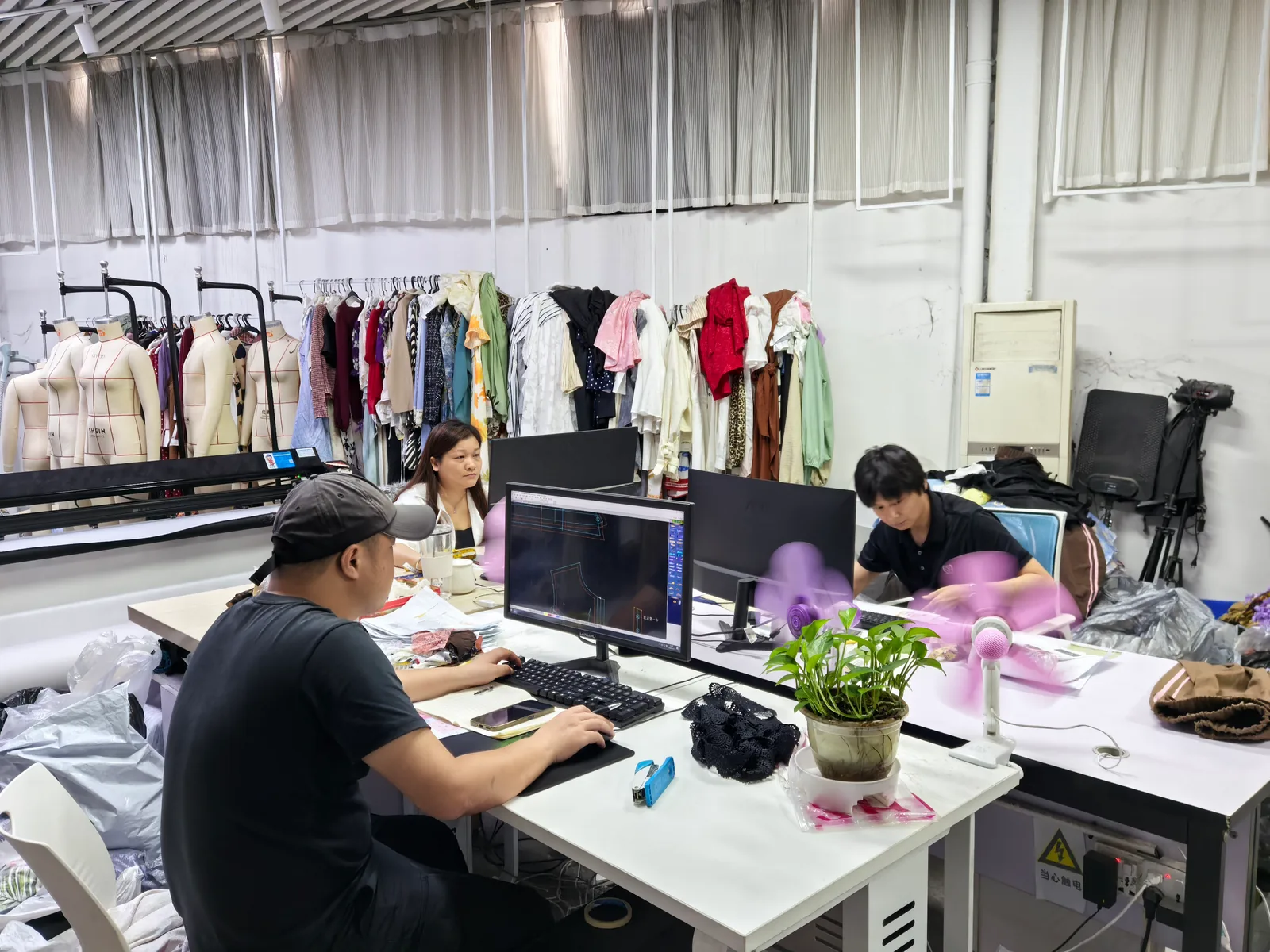
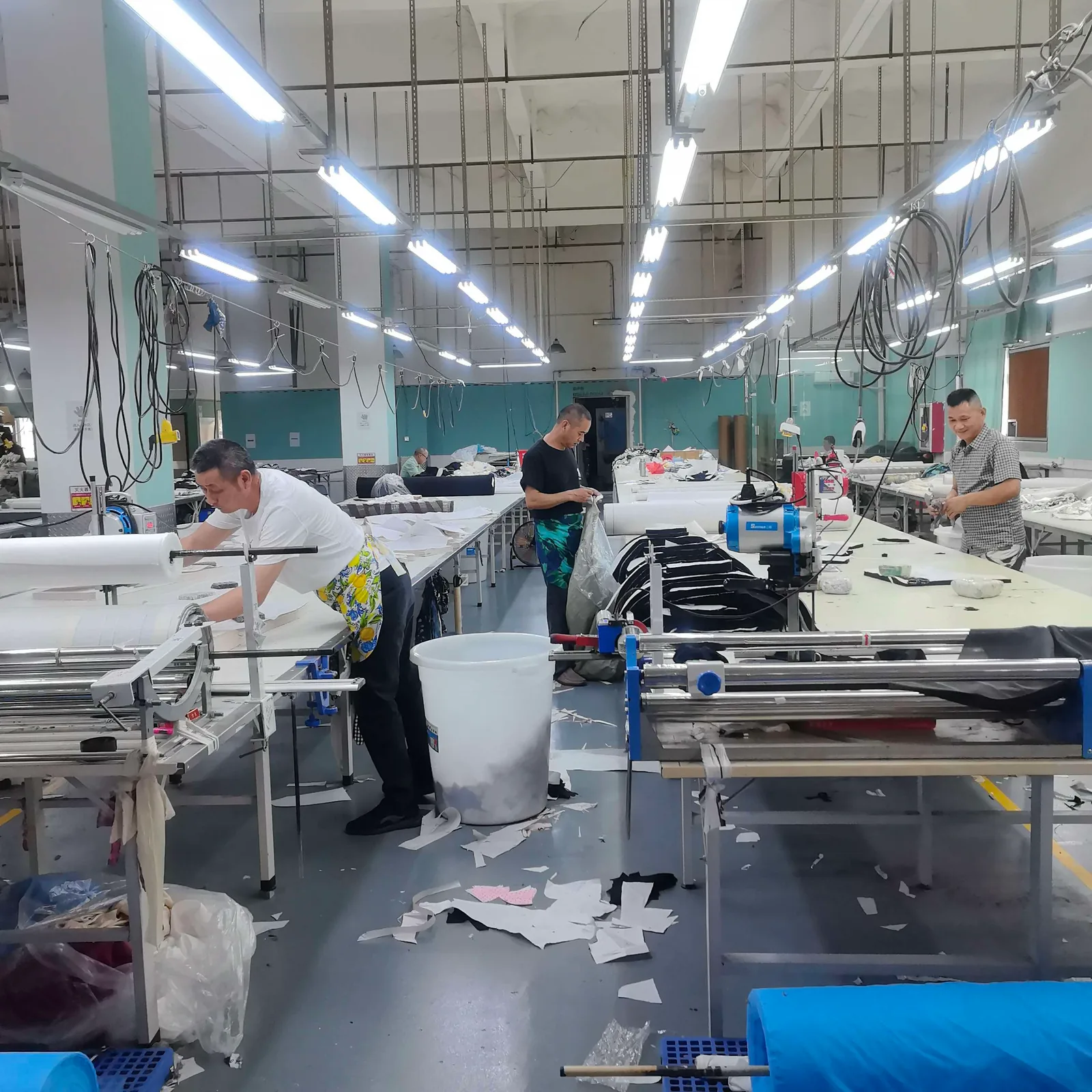
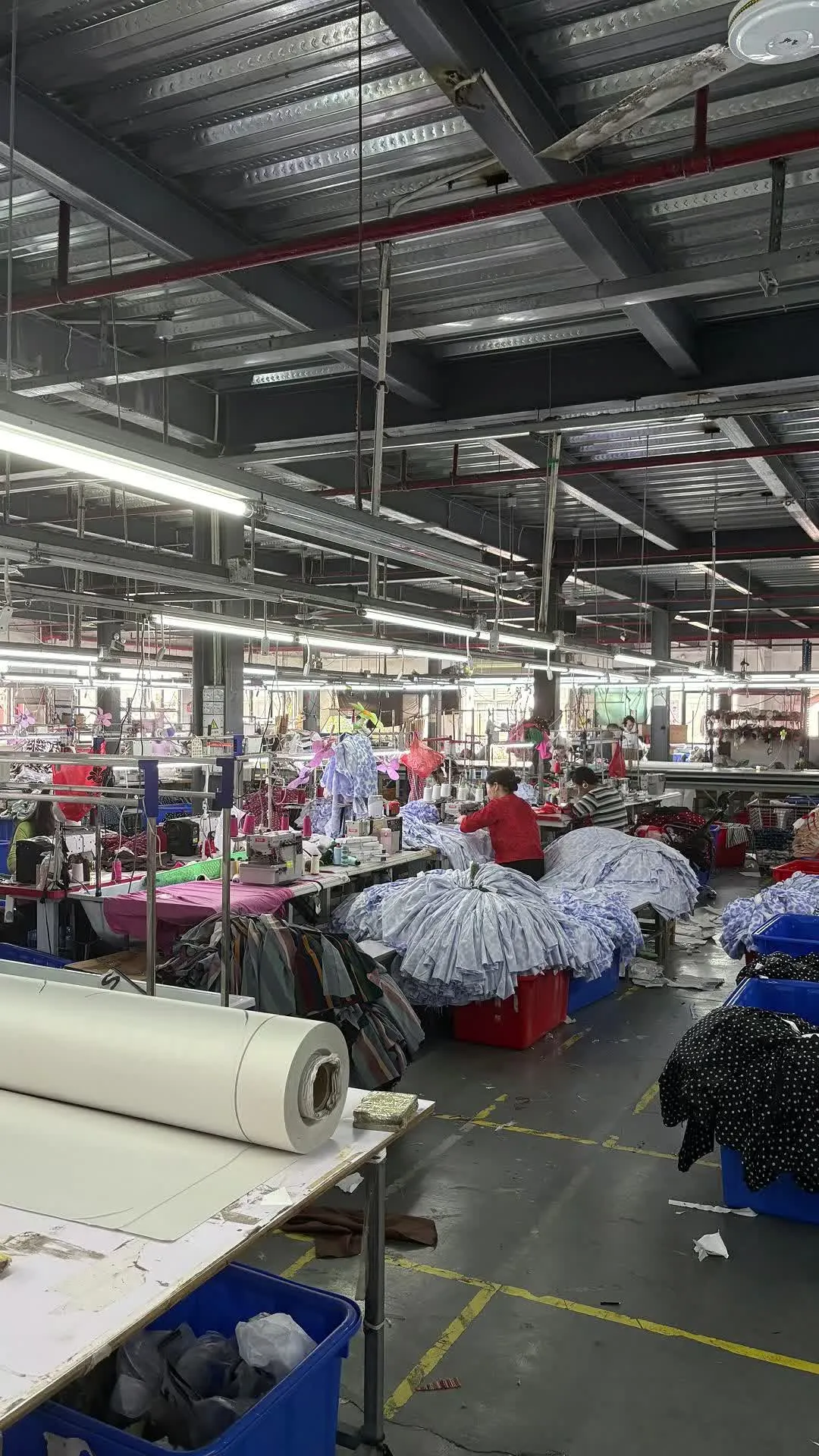
- Publicly visible strengths: Operating for 16 years, Mostnica features a dedicated Panyu R&D and sample center with deep ties to the Guangzhou fabric ecosystem. They excel at producing simple-to-medium complexity woven dresses, casual dresses, shirt dresses, and resort wear. They target a 5-day sampling time when materials are ready, support trial logic around 100 pcs/style or per color/style depending on the material, and can scale to bulk runs of 3,000-50,000 pcs/style. They utilize AQL 2.5 standards alongside in-line and hourly QC patrols.
- Dress buyer should ask: "Can you source the specific printed chiffon for my resort dress locally in Guangzhou to speed up sampling?"
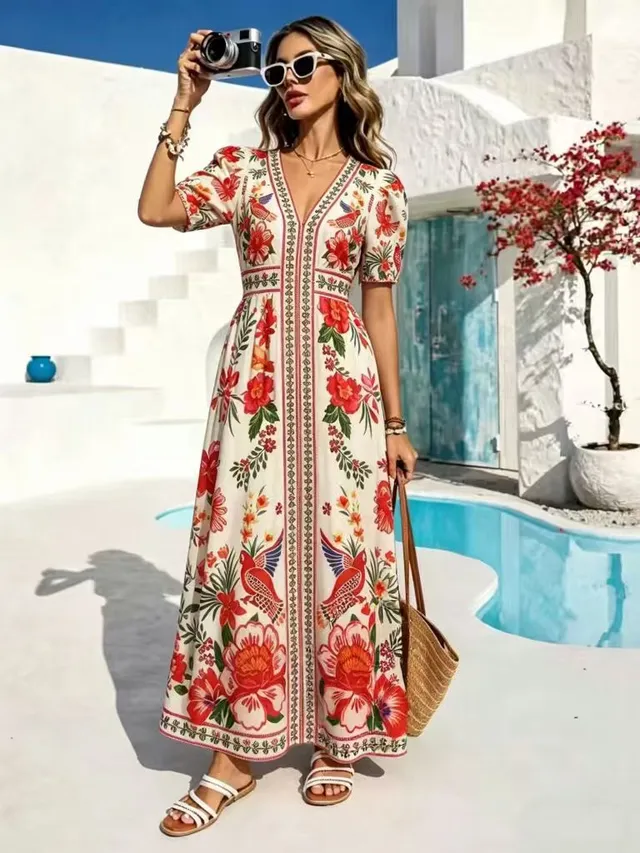
- Better fit / weaker fit: An incredibly strong fit for global buyers building affordable daily fashion dress lines with practical QC and controlled costs. Not a fit for luxury bridal couture or buyers needing ultra-technical performance wear.
2. H&Fourwing
- Best for: Higher-detail women's dress development and high-end positioning.
- Publicly visible strengths: H&Fourwing publicly positions itself as a premium women's clothing and dress manufacturer. They emphasize a design-to-fulfillment approach for higher-end markets, publicly noting MOQs around 200 pcs/color/style.
- Dress buyer should ask: "What premium construction methods (like French seams or complex lining attachment) do you use for high-end dresses?"
- Better fit / weaker fit: Better for brands targeting a premium retail price point. Avoid comparing them directly to affordable, high-volume fast-fashion suppliers, as their cost structure and target buyer are different.
3. Hongyu Apparel
- Best for: Broad custom clothing and private label category coverage.
- Publicly visible strengths: Their official site showcases a very broad manufacturing capability, covering dresses, streetwear, kidswear, and plus size. They are highly visible in the private label space, offering strong support for labels, tags, and custom packaging.
- Dress buyer should ask: "Since you produce streetwear and kidswear, do you have dedicated sewing lines specifically trained for lightweight women's woven dresses?"
- Better fit / weaker fit: Excellent for startup buyers who need to launch a diverse collection spanning multiple completely different garment categories from a single supplier. May be less specialized than a factory that solely produces women's dresses and tops.
4. D&J Fashion
- Best for: Guangzhou women's fashion and fast-fashion supply chains.
- Publicly visible strengths: Public profiles highlight their strong integration into the Guangzhou ecosystem. They emphasize OEM/ODM ladies' fashion, rapid design development, fabric and accessory sourcing, and tight lead time control for fast fashion.
- Dress buyer should ask: "What is your standard bulk lead time for a fast-fashion dress program once the PP sample is approved?"
- Better fit / weaker fit: Good for trend-driven brands needing fast turnarounds on women's apparel. Buyers should verify exact dress MOQs and current capacity directly.
5. Appareify
- Best for: Broad private label and apparel service visibility.
- Publicly visible strengths: Frequently appears in China manufacturer listicles; public competitor pages describe broad cut-and-sew, private label, and OEM capabilities.
- Dress buyer should ask: "Are you a direct factory for women's dresses, or do you act as a sourcing platform connecting me to partner facilities?"
- Better fit / weaker fit: Good for brands wanting a highly visible, broad-service provider. Weaker fit if you need direct communication with the specific sewing line operators handling your dresses.
6. AEL Apparel
- Best for: Sustainable and casual apparel programs.
- Publicly visible strengths: Appears in listicles for eco-friendly and private-label clothing, focusing on casual and lifestyle dress categories.
- Dress buyer should ask: "Can you provide verifiable, official certification proof (like GOTS or OEKO-TEX) for your sustainable fabric claims?"
- Better fit / weaker fit: Good for casual, eco-conscious marketing angles. Do not assume sustainability claims are audited without requesting direct proof.
7. ODMYA
- Best for: Larger-volume, mass manufacturing dress programs.
- Publicly visible strengths: Frequently appears in listicles as a large-scale production candidate capable of handling significant volume orders.
- Dress buyer should ask: "What is your minimum order quantity for custom-dyed fabrics, and can you handle split shipments for massive orders?"
- Better fit / weaker fit: Excellent for major retailers or established brands with heavy inventory needs. A weak fit for startups needing 100-piece trial orders.
8. SunriseDress
- Best for: Casual dress and A-line dress-focused programs.
- Publicly visible strengths: Directly targets dress manufacturer queries and frequently shows ranking table patterns for casual and fast-market dress styles.
- Dress buyer should ask: "Do you offer full custom OEM development from a sketch, or do you primarily offer ODM catalog modification?"
- Better fit / weaker fit: Good for buyers looking for a factory solely dedicated to the dress category. Weaker fit if you need high-end bridal or heavy outerwear later.
9. Huasha Bridal
- Best for: Bridal and formal dress contrast.
- Publicly visible strengths: Representative of the Suzhou bridal ecosystem, specializing in private-label wedding dresses, bridal gowns, and highly intricate formalwear.
- Dress buyer should ask: "How do you manage quality control for hand-beaded details and delicate lace applique during bulk production?"
- Better fit / weaker fit: Perfect for bridal boutiques. Completely incompatible with buyers looking for affordable casual summer dresses.
What Makes a Good Dress Manufacturer Different From a General Clothing Factory?
A common mistake brands make is assuming that any factory that sews excellent t-shirts or hoodies can seamlessly transition to sewing dresses. This is fundamentally untrue. Dressmaking requires a distinct technical skill set. If you send a woven maxi dress tech pack to a knitwear factory, you are inviting disaster. A dedicated dress manufacturer exercises far tighter control over specific construction nuances.
- Fit and Grading: A t-shirt only needs to fit the shoulders and chest loosely. A dress must fit the bust, waist, and hips simultaneously. Accurately grading these precise measurements across a full size run (e.g., XS to XXL) requires expert pattern-making skills.
- Hem Balance: A dress hem, especially on bias-cut skirts, circle skirts, or wrap dresses, must be perfectly balanced so it does not dip awkwardly or expose the lining when worn.
- Lining and Opacity: Light-colored summer dresses, resort wear, and formal wear often require inner lining. A skilled factory knows how to attach lining so that it provides opacity without causing the outer shell fabric to pull, pucker, or twist.
- Drape and Fabric Behavior: Understanding how a specific fabric (like lightweight chiffon, rigid poplin, or heavy satin) will behave when cut, sewn, and pressed is crucial. A dress pattern designed for stretch jersey will fail completely if sewn in non-stretch woven cotton.
- Zipper and Closure Durability: Inserting an invisible zipper cleanly into the side seam or center back of a delicate fabric without it catching or creating a visible bump requires highly trained sewing operators.
- Print Matching: For dresses featuring bold floral or geometric prints, an excellent manufacturer will take the extra time during the cutting phase to ensure the print matches attractively across center seams, elevating the perceived value of the garment.
Because of these complexities, a good dress manufacturer relies heavily on the Pre-Production (PP) sample and the sealed sample. They will not rush into bulk cutting until all fit, drape, and construction details are approved and locked in by the buyer.
MOQ, Sampling, and Bulk Lead Time: What Buyers Should Compare
When sourcing private label clothing manufacturers for dresses, Minimum Order Quantity (MOQ) is often the first question asked, but it is frequently misunderstood.
Understanding MOQ Logic
MOQ is rarely just a flat number. It can be structured per style, per color, per fabric, or restricted by size range. For example, a factory might quote "MOQ 100," but if they mean 100 pieces per color and you want to launch a dress in 4 colors, your actual commitment is 400 pieces. Furthermore, lower MOQs often mean the factory must purchase readily available "market fabric" rather than custom-milling a unique fabric shade for you. Lower MOQs also typically result in higher unit prices because the factory's setup costs are distributed over fewer garments.
How Complexity Affects Lead Time
Lead times are directly tied to the complexity of your dress design:
- Simple Knit or Bodycon Dresses: Very fast to sample and produce.
- Simple Woven Casual or Shirt Dresses: Standard development timelines apply (e.g., 5-8 days sampling, 12-14 days bulk after approvals).
- Lined Woven Dresses: Adds time for sourcing compatible lining material and the extra labor of sewing the inner layer.
- Pleated or Smocked Dresses: Requires specialized machinery, tension testing, and careful pressing, adding several days to the timeline.
- Formal, Bridal, or High-Detail Dresses: Lengthy development requiring multiple fit iterations and slow, meticulous bulk production.
The OEM Dress Quote Checklist
To get an accurate, actionable quote from a China dress manufacturer, you must provide clear inputs. Prepare the following before reaching out:
| What to Prepare |
Why It Affects Price & Lead Time |
| Tech Pack or Reference Photos |
Dictates the complexity of pattern making and the labor minutes required on the sewing line. |
| Fabric Composition, GSM, and Width |
Fabric is usually the largest cost component. The weight (GSM) and width dictate fabric consumption yields per dress. |
| Trims and Zipper Grade |
Specifying YKK invisible zippers versus generic market zippers impacts both unit cost and durability. |
| Size Range & Tolerance |
A size range of S-M-L requires less pattern grading and cutting time than an extensive XXS-to-XXXL range. |
| Target Quantity (Per Color/Style) |
Determines if you meet the factory's MOQ and dictates the economy of scale applied to your unit price. |
Dress-Specific QC Checklist
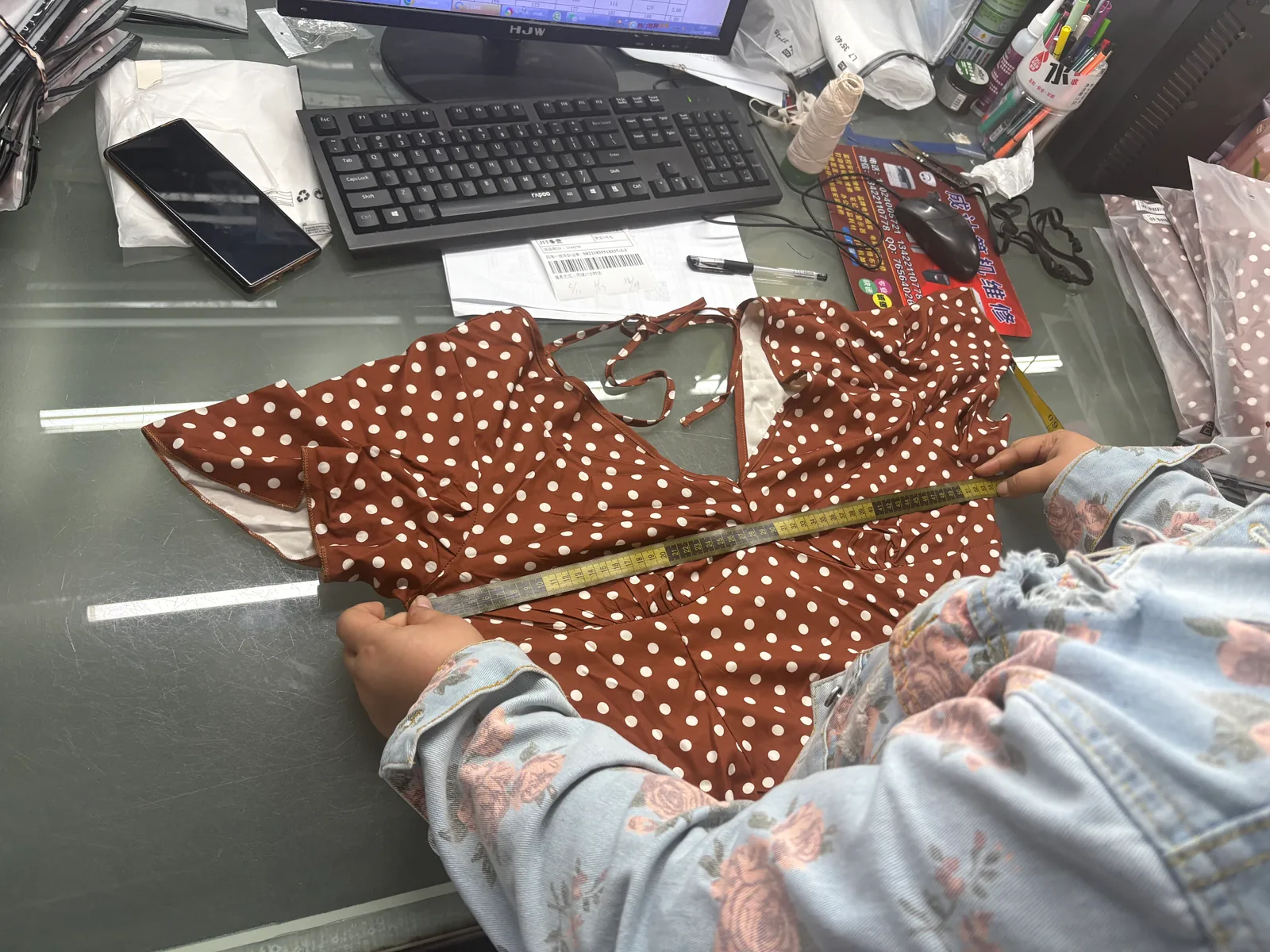
In the apparel industry, quality control must be proactive, not reactive. You cannot fix a poorly constructed dress after it has been packed into a polybag. A reliable manufacturer integrates QC at every stage—from fabric inspection to the sewing line. Learn more about general factory auditing in our factory audit guide. For dresses, you need to focus on these specific risks:
| QC Risk Factor |
Inspection Point / Consequence |
Question to Ask the Factory |
| Fabric Shrinkage |
Woven dresses that shrink after washing become unwearable, leading to massive customer returns. |
"Do you test fabric shrinkage and adjust the cutting pattern before bulk production begins?" |
| Lining Show-Through |
Using the wrong lining color under a light or sheer fabric looks cheap and unprofessional. |
"Do you guarantee exact color matching for lining, or use nude/white to ensure opacity?" |
| Seam Puckering |
Lightweight woven fabrics will pucker at the seams if the sewing machine tension is incorrect. |
"How do your operators adjust machine tension and thread choice for lightweight chiffon or silk?" |
| Zipper Failure |
A dress with a broken invisible zipper cannot be worn. |
"Do you perform functionality tests on zippers during final inspection?" |
| Measurement Out-of-Tolerance |
If a size Medium actually measures as a size Small, your sizing chart is useless. |
"Do you measure finished garments against the approved tolerance spec sheet across all sizes?" |
| Hem Twisting |
Cutting the fabric off-grain causes the side seams to skew and the hem to twist around the legs. |
"How do you control grainline alignment during the spreading and cutting process?" |
How Mostnica Fits Your Dress Program
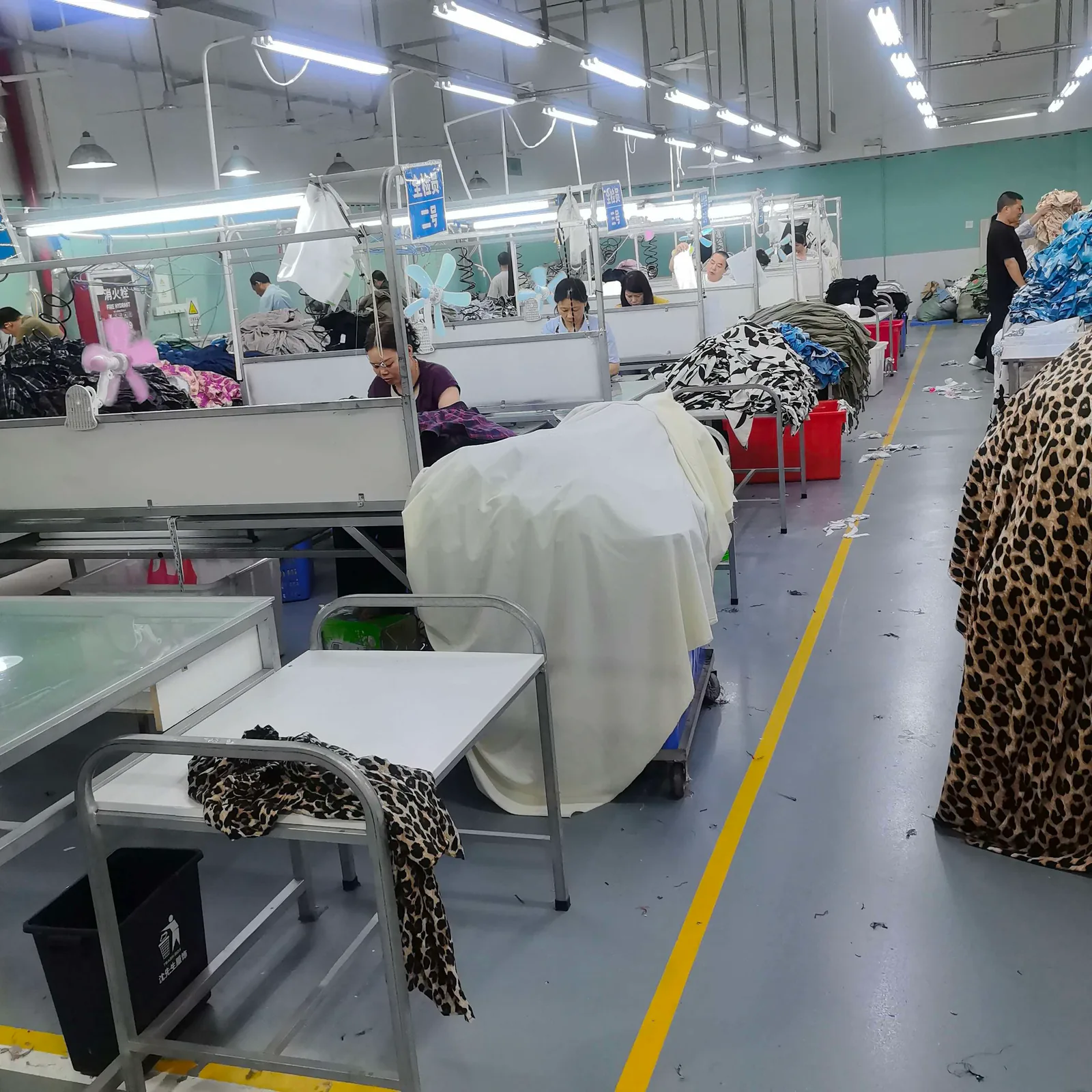
If your brand is focused on affordable, trend-responsive daily fashion rather than luxury couture, Mostnica Garment is engineered to be your ideal partner. Operating as Guangzhou Fulai Apparel Technology Co., Ltd. in the Panyu District of Guangzhou, we specialize in fast-fashion women's apparel.
- Main Categories: We excel at woven dresses, casual dresses, shirt dresses, bodycon styles, resort wear, tops, and pants, with t-shirts and hoodies serving as strong supporting categories.
- OEM/ODM Services: We offer showroom selection for quick modifications, rapid sample development, access to the massive Guangzhou fabric ecosystem, bulk production, and stringent quality control.
- Agile Sampling & MOQ: We target a sampling turnaround of around 5 days when your inputs and materials are ready. Our trial order logic is highly flexible—around 100 pcs/style or per color/style, depending on the specific fabric and style complexity.
- Scalability: We don't just do small trial runs. We are built to scale your successful styles, seamlessly handling planned bulk programs from 3,000 to 50,000 pcs/style when schedules and materials allow.
- Quality Commitment: We implement AQL 2.5 standards, internal fabric inspections, continuous in-line checks, and comprehensive final checks to guarantee commercially acceptable, high-quality daily fashion.
Mostnica is the optimal choice for global buyers who need practical speed, strict cost control, and reliable repeatability.
Questions To Ask Before Choosing a China Dress Manufacturer
Never wire a deposit without conducting due diligence. Ask potential suppliers these critical questions to gauge their professionalism and technical capability:
- Are you a direct factory, a trading company, or a sourcing agent?
- Can you show me recent physical dress samples or videos of styles similar in complexity to mine?
- What is your exact MOQ per color and per style for my chosen fabric?
- What specific factors (custom prints, specific trims, broad size ranges) will increase that MOQ?
- Can you source readily available market fabrics in Guangzhou, or do you require custom-milled textiles?
- Will you create a Pre-Production (PP) sealed sample for my explicit approval before you cut bulk fabric?
- What is your internal process for checking shrinkage, color fastness, seam tension, and measurement tolerances?
- Are you fully open to allowing a third-party QC inspector to audit the goods at your facility before shipment?
- Do you quote EXW or FOB terms? Can you recommend reliable freight forwarders while allowing me to control my own international shipping and destination customs (DDP) risk?
OEM Clothing Manufacturing FAQ
Who is the best dress manufacturer in China?
There is no single universal "best." The right factory depends on your niche. Mostnica Garment is an exceptional choice for affordable fast-fashion and daily wear woven dresses, while a specialist factory in Suzhou would be the best choice for premium bridal couture.
Is Guangzhou a good place to source dresses?
Absolutely. Guangzhou is a global powerhouse for women's apparel and fast fashion. Its immediate proximity to massive textile hubs, like the Zhongda fabric market, enables incredibly fast sampling, diverse material sourcing, and rapid trend adaptation.
What MOQ should I expect for private label dresses in China?
MOQs vary drastically by factory and fabric type. Agile fast-fashion factories like Mostnica can support trial runs of around 100 pieces per style/color using market-available fabrics. Large-scale mass manufacturers may demand 500 to 1,000 pieces as a starting point.
How long does dress sampling take?
Standard dress sampling usually takes about 5 to 8 days, provided that the necessary fabric, trims, and technical specifications are ready. Highly complex designs or custom-dyed fabrics will extend this timeframe significantly.
Should I choose a dress specialist or a general clothing factory?
For dresses, specialization is critical. Dresses require advanced skills in fit grading, hem balancing, lining insertion, and drape control. A factory that only sews basic knit t-shirts will likely struggle to produce a high-quality woven dress.
What is the difference between OEM and ODM dress manufacturing?
OEM (Original Equipment Manufacturer) means the factory produces dresses entirely from scratch based on your custom tech packs and designs. ODM (Original Design Manufacturer) means you select pre-designed styles from the factory's showroom and modify them with your private labels, color choices, or minor tweaks.
How should I handle international shipping from a China dress factory?
Most reputable apparel factories quote EXW (Ex Works) or FOB (Free On Board) terms. While the factory can recommend trusted freight forwarders and assist with export documentation, the buyer should ideally contract their own forwarder to manage international shipping, customs clearance, and DDP destination-side risks.
Send Your Tech Pack or Reference Sample
Ready to produce your dress collection? Share your dress photos, sketches, target fabrics, quantity requirements, and size ranges. Mostnica will review your project and outline the best OEM/ODM production path from fast sampling to repeatable bulk manufacturing.
Start Your OEM Project