Women's Tops Manufacturer for OEM, ODM and Private Label Production
Partner with a Guangzhou-based apparel manufacturer offering fast-fashion strength, low-MOQ trial logic, and reliable scale-up for private label women's woven and knit tops.
Sourcing women's tops requires a manufacturer that understands both delicate woven construction (like blouses and camisoles) and staple knit basics (like tees and hoodies). Mostnica Garment provides a credible, reliable OEM and ODM manufacturing solution based in Guangzhou, the heart of China's fabric market.
We specialize in affordable everyday fashion. For startups, DTC brands, and boutiques, we support trial orders starting around 100 pieces per style/color when utilizing in-stock market fabrics, allowing you to validate your designs. As your business grows, we easily scale to handle bulk volumes of 3,000 to 50,000 pieces per style.
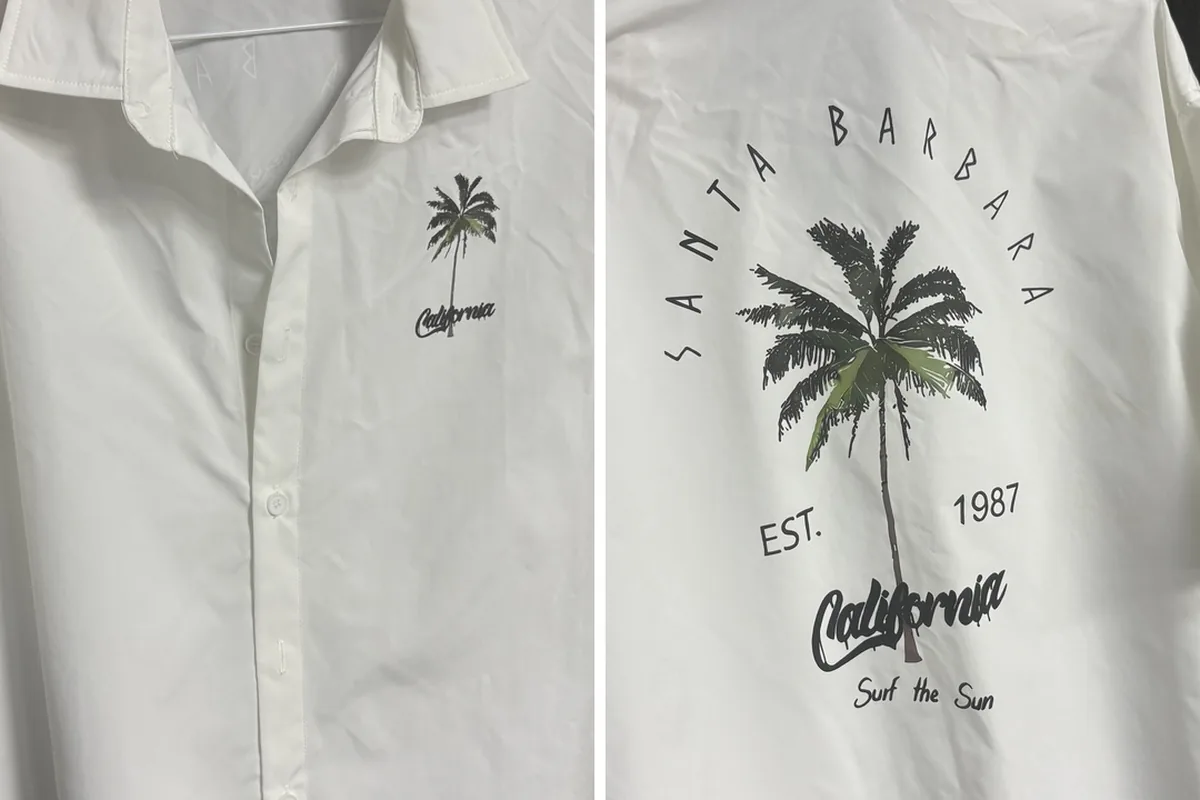
A front-and-back shirt sample gives the factory clear reference points for fit, construction, artwork placement, and finishing.
Product Scope: Types of Tops We Manufacture
Our production lines are equipped to handle a wide range of women's tops, from fluid woven silhouettes to structured knits.
Category
Description
Fabric Type
Blouse / Shirt Top
Button-downs, wrap tops, and tailored blouses. Focus on drape and clean collar finishing.
Woven
Crop Top
Fashion-forward short lengths, often requiring structured support or stretchy fabrics.
Woven / Knit
Tank / Camisole
Lightweight layering pieces, often featuring spaghetti straps and delicate necklines.
Woven / Knit
Bodysuit
Form-fitting tops with snap-button closures at the crotch for a seamless tucked-in look.
Knit (High Stretch)
Graphic Tee
Everyday staple T-shirts customized with screen printing, DTG, or embroidery.
Knit
Rib Knit Top
Textured tops that offer high elasticity and a body-hugging fit.
Knit (Ribbed)
Sweatshirt / Hoodie Top
Heavier, casual outerwear staples suitable for loungewear or streetwear.
Knit (Fleece/Terry)
Matching Set
Coordinated top and bottom combinations made from the exact same fabric dye lot.
Woven / Knit
Fabric Choices and Sourcing
The choice of fabric directly impacts fit, drape, shrinkage, and seam strength. Thanks to our location near the Zhongda fabric market in Guangzhou, we source almost any material your tech pack specifies.
Fabric Selection
Best For
Buyer Tradeoff
QC Concern
Cotton (Jersey / Woven)
Tees, crisp blouses, casual wear.
Breathable, but prone to wrinkling and some shrinkage.
Dimensional stability (shrinkage) during washing.
Polyester / Chiffon
Fluid blouses, camisoles, fast-fashion tops.
Highly affordable and colorfast; less breathable.
Seam slippage and static cling.
Rayon / Viscose
Soft, draped tops and resort wear.
Excellent drape and soft hand-feel; high shrinkage potential.
Requires careful shrinkage control and care labeling.
Spandex Blends
Bodysuits, rib knits, fitted crop tops.
Provides essential stretch and recovery.
Elasticity degradation if exposed to high heat.
Fleece / French Terry
Hoodies, sweatshirts, loungewear.
Warm and structured; bulkier to ship.
Pilling resistance and surface abrasion over time.
Trims and Customization
A private label strategy requires attention to detail beyond the fabric. We handle comprehensive customization, including:
Labels: Woven main neck labels, printed care/content labels, and size pips.
Hardware & Closures: Custom-dyed buttons, metal snaps, invisible zippers, and drawstrings.
Embellishments: Screen printing, digital printing (DTG), sublimation, and flat or 3D embroidery.
Finishing Details: Unique neck bindings, cover-stitching, and branded hangtags.
Trim decisions should be made before final sampling whenever possible. A blouse with shell buttons, a metal zipper, lace inserts, or a special heat-transfer label may need different sewing tension, needle choice, or pressing temperature from a basic jersey tee. If the trim is custom-made, the trim supplier may have its own MOQ and lead time. For this reason, Mostnica asks buyers to confirm visible trims, care labels, hangtags, polybags, and carton marks during quotation rather than treating packaging as an afterthought.
MOQ Logic: How We Determine Minimums
We do not enforce arbitrary MOQs. Our low MOQ logic is tied directly to fabric purchasing requirements and production setup times.
Scenario
Typical MOQ Impact
In-Stock Market Fabric
Lowest MOQ. We can often start trial orders at 100 pcs per style/color.
Shared Fabric Across Styles
Allows you to spread fabric yardage (e.g., matching a blouse and a skirt).
Custom Pantone Dyeing
Requires higher minimums (often 300-500kg of fabric) to meet the mill's vat size requirements.
Custom All-Over Print
Varies depending on the print method (Digital printing has lower MOQs than rotary screen printing).
Specialized Trims / Hardware
Custom molded buttons or zippers may require bulk orders from the trim supplier.
Complex Size/Color Splits
Splitting a 100-piece order into 5 colors and 6 sizes makes cutting inefficient and raises unit cost.
Sampling and RFQ Inputs
To get an accurate quote and move quickly into sampling, we recommend providing:
A comprehensive Tech Pack with flat sketches, measurement charts, and construction call-outs.
Clear fabric and composition requirements.
Target quantity per style and color.
Any physical reference samples (you can mail these directly to our Guangzhou office).
Our standard sampling time is 5-8 days when utilizing available market fabrics.
For tops, the most useful RFQ package includes a front/back sketch or reference sample, fabric target, size range, neckline and sleeve details, hem finish, artwork placement, and quantity by color. If your style includes a fitted bodice, elastic smocking, lining, cutouts, buttons, or special print placement, call that out clearly. These details affect cutting efficiency, sewing time, inspection points, and whether a low-MOQ trial can be made with market fabric.
Quality Control (QC) Standards
We implement strict quality control protocols based on AQL 2.5 standards to mitigate risks associated with cut, sew, and finish.
Inspection Stage
Key Checks
Pre-Production (Fabric Check)
Color shading consistency, fabric flaws, and shade differences between sample and bulk.
In-Line Inspection (Sewing)
Seam strength, SPI (stitches per inch), and correct attachment of trims/labels.
Measurement Audit
Checking bust, shoulder, sleeve length, body length, armhole, and neckline against the graded spec chart.
We welcome third-party inspection agencies to audit orders before they leave our factory.
Logistics and Boundaries
Mostnica provides pricing based on EXW (Ex Works) or FOB (Free on Board) Guangzhou/Shenzhen terms.
What we handle: Production, packing, export documentation, and delivery to the local port (if FOB). What the buyer handles: Booking freight, managing destination customs clearance, paying import duties, and final delivery risk. We recommend working with a reliable freight forwarder to handle DDP (Delivered Duty Paid) routing if you are unfamiliar with importing.
Is Mostnica the Right Fit?
Best-fit buyers:
Startups and boutiques looking for fast-fashion, affordable everyday apparel.
Brands needing woven dresses, tops, and pants, alongside supporting knit items like tees.
Buyers wanting a reliable path from a ~100 pcs trial order to a 3,000+ pcs bulk run.
Who we do NOT fit:
Brands demanding ultra-premium, luxury craftsmanship at fast-fashion prices.
Buyers seeking universally guaranteed sustainability certifications (we offer practical quality, not necessarily fully certified organic/recycled setups for every basic order).
Those needing a rigid "50 pcs across all complex styles" MOQ or full DDP/customs responsibility from the factory.
Fit and QC Points Specific to Women's Tops
Women's tops often fail in small details rather than in the general silhouette. The buyer should check shoulder slope, armhole depth, bust width, neck drop, sleeve opening, body length, and hem sweep across the full size range. For fitted knit tops, stretch recovery and seam stability matter. For woven blouses, the key risks are tight armholes, pulling across the bust, transparent fabric, seam slippage, and puckering around curved seams or button plackets.
During sampling, approve both the look and the measurable control points. A top can look good on a mannequin but still fail when the sleeve opening is too tight, the neckline stretches after washing, or the front length changes after pressing. In bulk production, Mostnica uses fabric inspection, first-piece checks, inline inspection, and final AQL 2.5 sampling to keep those risks visible before shipment. Buyers who have stricter tolerances or destination-market testing requirements should state them in the tech pack and purchase order.
Production Scenarios for Different Tops Programs
Not every women's tops order should be managed the same way. A boutique testing three woven blouses needs a different setup from a wholesaler repeating a best-selling graphic tee. For small trial orders, the buyer should simplify colors, use available market fabrics, and keep trims close to existing options. This keeps sampling and fabric sourcing realistic. For repeat programs, the buyer can lock a fabric quality, build a size-set record, and use the same approved construction across several styles to improve consistency.
For woven fashion tops, the planning focus is drape, transparency, seam stability, and pressing. For knit tops, the focus shifts to GSM, recovery, shrinkage, neckline stretch, and print durability. For bodysuits or fitted crop tops, the pattern and fabric must be checked together because stretch and body length affect comfort. For matching sets, fabric shade and wash behavior should be approved across the top and bottom at the same time. These category differences are why Mostnica asks for product scope before quoting; "tops" is a broad category, not one fixed production formula.
Brands planning regular drops should also decide how much design variation they really need. Reusing one fabric across a blouse, camisole, and skirt may help hit fabric minimums and improve launch consistency. Reusing a label and packaging spec across a full tops program can reduce trim risk. By contrast, changing fabric, print, trim, and silhouette on every low-volume style increases sample rounds and makes bulk QC harder. A stronger tops program usually balances fresh styling with repeatable production decisions.
Buyers should treat these references as decision support, not as universal rules. The right tops program depends on the target customer, sales channel, fabric availability, size range, and how quickly the brand needs to test or reorder. Mostnica's role is to help translate those commercial choices into a realistic sampling and bulk-production plan.
If your team is unsure which fabric or construction route to choose, send the target retail price and reference samples together; that gives the factory a practical cost boundary.
A useful first inquiry is not simply "can you make this top?" but "which details will change cost, sample time, or fit risk?" That question helps identify whether the supplier understands neckline stability, sleeve balance, bust ease, shade consistency, and finishing before the order becomes a bulk commitment.
Frequently Asked Questions
Can the factory make both woven fashion tops and knit T-shirts/sweatshirts?
Yes. Our production lines are adaptable, and our proximity to Guangzhou's fabric market allows us to easily source and manufacture both woven blouses and knit staples like T-shirts and sweatshirts.
How are shade differences controlled between sample and bulk?
We perform fabric checks during the pre-production phase. For in-stock market fabrics, slight lot-to-lot shading differences can occur. For custom-dyed fabrics, lab dips are approved by the client before bulk dyeing to ensure accuracy.
Which trims need approval?
All visible and functional trims—buttons, zippers, drawstrings, neck labels, and care labels—are sourced and presented for buyer approval during the pre-production sampling stage.
Who handles customs, DDP, and destination-side import risk?
Mostnica operates on EXW or FOB terms. While we support all export documentation, the buyer or their nominated freight forwarder is responsible for shipping, customs clearance, and import duties at the destination.
Start Your Private Label Production
Have a tech pack for a new line of women's tops? Contact Mostnica to discuss fabric sourcing, sampling timelines, and practical MOQ options.