Custom Sweater Manufacturer in China for Private Label Knitwear
Mostnica supports custom sweater and private-label knitwear projects for brands, retailers, wholesalers, and sourcing teams. From Guangzhou, we review the design, target yarn and hand feel, knit construction, size range, colorways, quantity, labels, packaging, and delivery window before proposing an OEM or ODM development route. Sweaters are a supporting category within our affordable everyday apparel business, so every project is confirmed for technical fit, material availability, sampling, and production capacity before bulk commitments are made.
We focus on everyday/trend-responsive seasonal knitwear and private-label programs. Our goal is to provide a trial-to-repeat-bulk planning path after a thorough feasibility review of your specifications.
*Price and schedule require yarn, structure, color, size range, quantity, and delivery review.
Custom Sweater and Knitwear Projects We Can Review
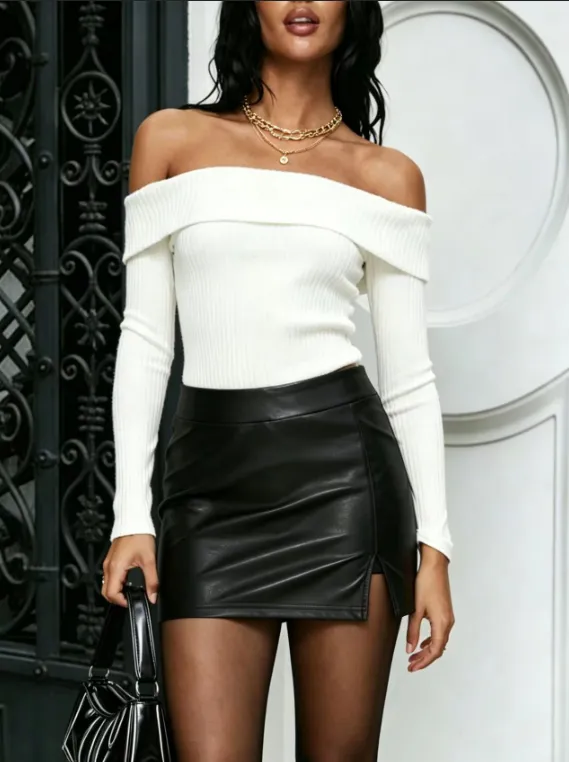
Pullovers, cardigans, sweater vests, and knit tops
We develop pullovers, cardigans, sweater vests, and fashion knit tops for seasonal private-label programs. Buyers can specify neckline, closure, silhouette, length, sleeve, knit structure, color layout, trims, and labels so the development team can translate the concept into an approvable sample and bulk-production brief.
OEM, ODM, and private-label routes
- OEM: You supply a tech pack, measurements, artwork, or approved reference.
- ODM: Mostnica reviews showroom/reference options and proposed modifications, subject to sweater-specific availability.
- Private label: We coordinate the main label, size/care label, hangtag, packaging, barcode, and carton requirements after specifications are approved. Private label requires comprehensive integration into the production process, not merely attaching a logo to ready stock.
Table 1: Product scope and specification inputs
| Confirmed product | Buyer should define | Main development risks |
|---|---|---|
| Pullover | Neckline, silhouette, sleeve, length, yarn target, structure, color, sizes | Neckline recovery, shoulder balance, sleeve/body length, post-finish dimensions |
| Cardigan | Closure, placket, button/buttonhole, neckline, length, yarn/structure | Placket distortion, button spacing, front balance, shade |
| Sweater vest | Neck/armhole, rib, length, fit, yarn/structure | Armhole shape, neckline stability, rib recovery |
| Knit top | Sleeve/neckline, body fit, opacity, yarn/structure, care target | Stretch/recovery, measurement change, hand feel |
Sweater Manufacturing Is Not the Same as Hoodie Manufacturing
A sweater commonly starts with yarn knitted into panels or a shaped garment, followed by assembly and finishing. A sweatshirt or hoodie is commonly cut from pre-knitted fabric and sewn. Because the production routes differ, sweater development focuses on yarn, gauge, knit structure, shaping, linking, and finishing, while sweatshirt development focuses more on fabric specification, cutting, seams, rib, and decoration.
RFQ inputs differ significantly. For sweatshirts, buyers focus on fabric GSM and cut. For sweaters, the focus is on yarn specification, gauge, and knit structure. If you are looking for cut-and-sew fleece production, please review our custom hoodie manufacturer capabilities.
Sweater Development
Focuses on yarn specification, gauge, knit structure, panel shaping, linking/assembly, and wet finishing.
Sweatshirt Development
Focuses on fabric (e.g., fleece) GSM, cut, seams, rib, and surface decoration (print/embroidery).
Start the Quote with Yarn, Construction, Fit, and Quantity
Yarn brief and target hand feel
A fibre name alone is insufficient. We ask the buyer for target fibre composition, price tier, season, weight/hand feel, care expectation, and any certification requirement. Yarn count, twist, blend, color route, lot availability, and finishing all affect the result and commercial feasibility. Using stock yarn or supplier-available yarn may reduce development and material-minimum pressure, while custom colors or special yarns typically increase minimums and lead time. We evaluate material availability for each project before confirming capability.
Gauge and knit structure
Gauge is defined as needles per inch across a knitting machine's needle bed. Buyers may describe the desired visual density and hand feel, while the technical team confirms the workable gauge. Higher or lower gauge does not inherently mean "better quality"; yarn, stitch structure, density, machine, fit, and finishing must interact correctly. We evaluate requirements for jersey, rib, cable, jacquard, intarsia, and openwork on a project-by-project basis.
Fit, stretch, recovery, and finishing
A point-of-measure (POM) chart and tolerances are required. Key areas include neckline stability, shoulder shape, sleeve/body length, hem sweep, button placket, stretch/recovery, post-finish measurement, and size grading. Measurements should always be approved after the intended finishing and care-test route, not only on an unwashed first panel.
Table 2: Sweater specification decision table
| Decision | What the buyer provides | What production must confirm | Why it changes the result |
|---|---|---|---|
| Yarn | Composition target, reference swatch/hand feel, price tier, care target | Availability, count/twist/blend, lot, custom color route, documentation | Appearance, touch, weight, care, cost, minimums |
| Gauge/density | Desired look, thickness, drape, reference | Workable machine/gauge and stitch density for the yarn/structure | Surface, weight, drape, stitch definition, feasibility |
| Structure/artwork | Rib/cable/jacquard/intarsia/openwork reference and artwork | Technique, color limits, shaping, repeat, programming, sample risk | Complexity, time, waste, consistency, cost |
| Fit | POM chart, tolerance, size range, intended silhouette | Post-finish dimensions, stretch/recovery, grading | Customer fit and repeatability |
| Finish/care | Hand feel, wash appearance, care claim, test requirement | Wet finish, pressing/boarding, test route, packaging | Final dimensions, surface, color, consumer care |
Resolve These Sweater Development Decisions Before Approving Bulk
Approve a knitted reference, not yarn softness alone. Yarn, stitch structure, knitting tension, and finishing interact. A cone or color card cannot show the finished garment’s weight, openness, recovery, or drape. Request a swatch in the proposed structure and evaluate the development garment after the intended finishing route.
Separate a fit change from a finishing change. If a sample is too long, establish whether the dimensions were taken before or after finishing and under the same measurement conditions. Correcting the pattern or knitting program while leaving inconsistent finishing unresolved can create a second fit problem. Define the measurement condition in the approved specification.
Review strain points in use. On a cardigan, examine whether the placket waves or gaps when buttoned; on a pullover, review the neck opening and recovery; on a vest, check armhole shape and linking. These are recommended development checks, with tolerances and performance tests agreed for the actual design.
For an affordable capsule, consider fewer yarn colors and a shared yarn across styles before reducing fit development or necessary testing. A more complex knit structure can change yarn consumption and production time even when garment dimensions stay the same. Ask for a revised costing when changing the structure rather than assuming a like-for-like substitution.
Mostnica reviews sweaters as a project-specific category. Confirm the production route, yarn availability, knitting requirements, sample stages, and schedule in the proposal. General apparel network capacity and woven-garment sample timing should not be treated as a sweater-specific commitment. The sweater manufacturing guide explains the technical inputs.
A Practical OEM/ODM Sweater Development Flow
- Project intake and feasibility review: Collect design/reference, construction, yarn target, colorways, size range, quantity, labels/packaging, market, required tests, and delivery date. Confirm production route before quotation.
- Specification and commercial proposal: Align yarn/structure options, sample scope, revisions, MOQ basis, cost drivers, test responsibility, Incoterm, and provisional schedule. State assumptions in writing.
- Development sample: Approve silhouette, dimensions, knit appearance, hand feel, color direction, trims, labels, and workmanship. Record requested corrections.
- Revised sample, size set, or PP sample: Use only the approval stages appropriate to the project. The approved sample and specification record become bulk references.
- Bulk yarn/material confirmation: Confirm yarn identity, composition documentation where required, color standard, lot/shade control, trims, and packing materials before release.
- Knitting, assembly, and inline control: Check panel/garment appearance, dropped stitches or holes, dimensions, linking/seams, color distribution, and repair/mending controls.
- Washing, finishing, final measurement, and inspection: Verify appearance, hand feel, dimensions, shade, workmanship, labels, packing, and agreed lab-test results. AQL final sampling complements rather than replaces material tests and in-process control.
- Packing and handoff: Follow approved fold/pack/carton instructions and FOB/EXW responsibility. We cooperate with the buyer's trusted freight forwarder.
What Determines Sweater MOQ and Unit Cost?
Sweater MOQ is usually a combined result of yarn and color minimums, the number of styles and size/color splits, knitting setup, structure complexity, linking and finishing work, trims, testing, and packaging. Ask whether a quoted minimum applies per style, per color, or across a shared yarn program; a headline number without that basis is not enough for inventory planning. There is no responsible universal MOQ or unit price without a reviewed specification.
A common decision rule: reduce colors and structures, use a commercially available yarn route where suitable, and validate one approved construction before expanding a capsule. Feasibility still requires review.
Table 3: MOQ and unit-cost driver matrix
| Driver | Lower-complexity direction | Higher-complexity direction | Question to settle before quote |
|---|---|---|---|
| Yarn/color | Available yarn and consolidated colors | Special yarn, custom dye, small color splits | What minimum applies per yarn lot and color? |
| Styles/SKUs | One proven construction, focused size range | Many structures, colors, and size combinations | Is MOQ per style, color, or yarn program? |
| Knit technique | Simple structure after feasibility review | Complex motif, multiple colors, special shaping | What programming/sampling and failure risk is involved? |
| Assembly/finish | Standard confirmed route | Detailed linking, trims, special wash/finish | Which operations and approvals add time? |
| Testing/packing | Agreed basic inspection and standard packing | Multiple lab tests, custom packs, barcode/carton rules | Who approves, pays, and schedules each requirement? |
Sweater Quality Control Should Cover More Than Final AQL
Material and color controls
We verify yarn identity/composition documents as specified, lot/shade reference, cones/packages, trims, and the buyer-approved color standard.
Knitting and assembly controls
Controls monitor for holes, dropped/missed stitches, uneven tension, pattern alignment, panel symmetry, linking/seam appearance, loose ends, repair visibility, and neckline/placket/button alignment.
Fit, finishing, and performance controls
We check post-finish point-of-measure results, shape balance, stretch/recovery as agreed, hand feel, pilling propensity, dimensional change, and colorfastness where required by the market or purchase order. Methods like ISO 12945-1 for pilling, ISO 6330 + ISO 5077 for washing/dimensional change, and ISO 105-C06 for colorfastness should be agreed upon. Note that pilling is multifactorial and cannot honestly be guaranteed never to occur; listing a standard does not automatically mean a product passed it.
Final inspection and buyer-defined acceptance
AQL 2.5 is a statistical acceptance limit often used for major defects in final garment sampling; it is not a promise of zero defects and it does not replace laboratory tests for pilling, dimensional change, or colorfastness. Buyers should define defect classes, measurement tolerances, test methods, and acceptance criteria in the purchase order. Review our AQL 2.5 garment inspection guide for details.
Checklist 4: Sample and bulk QC gates
- Correct yarn/reference, lot/shade, composition documents where required
- Knit appearance, stitch definition, holes, dropped stitches, tension, motif alignment
- Panel/garment symmetry, linking or seam workmanship, loose ends, visible repairs
- POM results after intended finishing, size grading, neckline/placket/button alignment
- Hand feel, surface appearance, pilling/dimensional/colorfastness results where specified
- Labels and care content, placement, hangtags, packaging, barcodes, carton marks
- Inline correction record, final defect classification, AQL sampling, third-party report if required
Private Labels, Care Labels, and Destination-Market Inputs
We ask the buyer/importer to provide the destination market and approved label content early. For the US, FTC guidance supports discussing fibre-content, country-of-origin, responsible-company identity, and care-instruction requirements. For the EU, Regulation (EU) No 1007/2011 governs textile fibre names and composition labeling. Other safety, language, packaging, and chemical rules may apply and should be confirmed by your compliance professional.
Labels, hangtags, packaging, barcodes, and carton marks must be included at quotation because supplier minimums and approval cycles affect cost and schedule. Explore our private label clothing production services for more integration details.
Is Mostnica the Right Fit for Your Sweater Program?
Stronger-fit projects
- Affordable everyday or trend-responsive sweater/knitwear programs after technical review
- Buyers who can provide a tech pack, reference sample, measurement chart, or clear development brief
- Brands that value Guangzhou development/material coordination and want a trial-to-repeat-bulk path
- Existing buyers combining sweater development with other Mostnica-supported everyday apparel categories
- Buyers willing to confirm samples, testing, labeling, QC, and logistics responsibilities in writing
Programs reviewed case by case
- Luxury/couture hand-knit or specialist cashmere programs
- Orders requiring a specific flat-knitting brand, narrow gauge range, or seamless/WHOLEGARMENT capability
- One-piece orders, print-on-demand, or a guaranteed low MOQ regardless of yarn and color
- Projects requiring unverified fibre certification, chemical compliance, or destination-market lab performance
- Buyers expecting Mostnica to assume customs, DDP, or destination-side logistics risk by default
Mostnica is a Guangzhou OEM/ODM apparel partner for affordable, trend-responsive sweater and private-label knitwear projects that require disciplined specification review, sample approval, practical QC, and a route to repeatable bulk production. We demonstrate a controlled qualification process to ensure we are the right fit for your needs.
What to Send for a Custom Sweater Quote
A custom sweater manufacturer needs more than a product photo. To help us confirm feasibility and provide an accurate quote, please provide:
- Front/back technical sketch, clear reference photos, or physical sample
- Target product type, silhouette, neckline, closure, sleeves, hem, and length
- Yarn composition/hand-feel/weight target and any approved reference swatch
- Requested gauge or knit appearance, structure, motif/artwork, and Pantone/color standard
- Point-of-measure chart, tolerances, size range, and quantity by size/color
- Main label, size/care labels, hangtags, trims, packaging, barcode, and carton needs
- Destination market, required test methods/acceptance criteria, and third-party inspection plan
- Target delivery date, Incoterm, and nominated freight-forwarder details when known
Ready to discuss your project? Learn how to prepare a clothing tech pack or send us your brief today.
Send Your Sweater Brief for Feasibility ReviewFor broader context, learn more about our apparel production process and OEM clothing manufacturing services. Compare the technical decisions in our sweater manufacturing guide, review the China sweater manufacturer shortlist, or explore adjacent women's tops manufacturing programs.
Custom Sweater Manufacturing FAQ
What is the MOQ for custom sweaters in China?
Sweater MOQ is usually a combined result of yarn and color minimums, the number of styles and size/color splits, knitting setup, structure complexity, linking and finishing work, trims, testing, and packaging. Exact Mostnica MOQ is confirmed after style, yarn, color, structure, quantity, and schedule review.
What information should I send to get an accurate sweater quote?
A usable brief identifies the target yarn or hand feel, knit structure, gauge or visual density, measurements and tolerances, colorways, quantity by size and color, labels, packaging, required tests, and delivery market. These inputs determine whether the design is technically feasible and commercially quotable.
Can Mostnica make both OEM and ODM private-label sweaters?
Mostnica is a Guangzhou apparel OEM/ODM partner that can review sweater and private-label knitwear projects alongside affordable everyday apparel programs. For OEM, you provide tech packs; for ODM, we review reference options. We also coordinate private label branding like tags and packaging.
How long does a custom sweater sample take?
Sample timing is confirmed after a full review of your style, yarn availability, colorways, knit structure, and schedule. Exact sampling time varies significantly based on whether we use available stock yarns or require custom dyeing and complex programming.
What is the difference between a sweater and a sweatshirt manufacturer?
A sweater commonly starts with yarn knitted into panels or a shaped garment, followed by assembly and finishing. A sweatshirt or hoodie is commonly cut from pre-knitted fabric and sewn. Sweater development focuses on yarn, gauge, and linking, while sweatshirt development focuses on fabric specification and cutting.
How should pilling and shrinkage be tested before bulk production?
A buyer can reduce uncertainty by approving a reference, agreeing a recognized test method (like ISO 12945-1 for pilling, or ISO 6330 and ISO 5077 for dimensional change) and acceptance grade, and checking bulk yarn and construction against the approved sample.
Can I customize sweater labels, care labels, hangtags, and packaging?
Yes. Labels, hangtags, packaging, barcodes, and carton marks must be included at quotation because supplier minimums and approval cycles can affect cost and schedule. You must provide destination market and approved label content early.
Does Mostnica manufacture cashmere, merino, wool, cotton, or recycled-yarn sweaters?
Yes, Mostnica can review cashmere, merino, wool, cotton, blended, and recycled-yarn sweater briefs for sourcing and production feasibility. Send the target composition, hand feel, price point, and any certification or test requirement so we can confirm the material route for your program.